
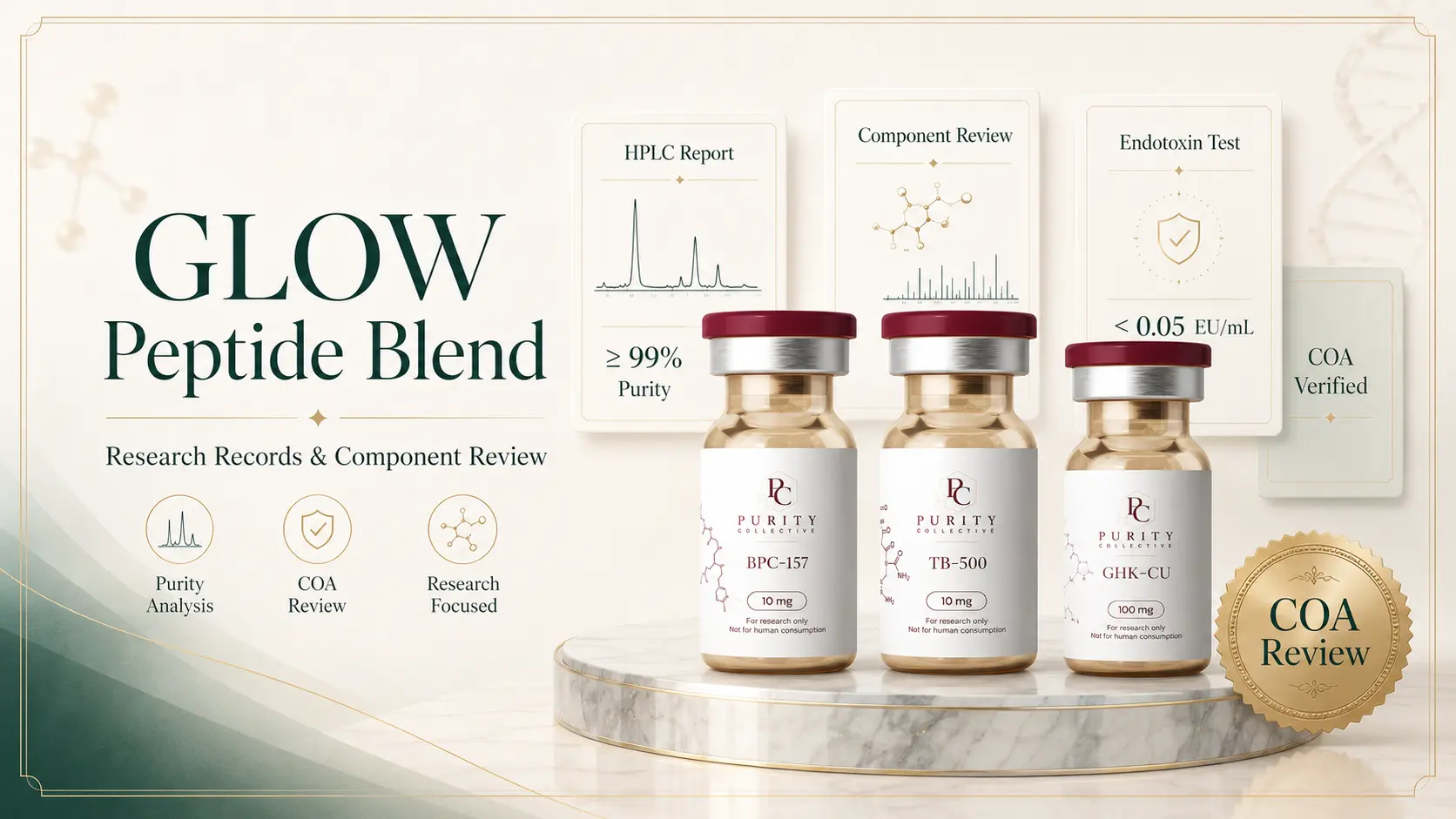
GLOW peptide blend research guide
GLOW 70mg is a Purity Collective catalog name for a documented three-component research blend. The product record lists BPC-157 10mg, TB-500 10mg, and GHK-Cu 50mg in one lyophilized-vial listing. That makes the page useful for qualified laboratory procurement, but it also makes evidence boundaries important: a blend report is not the same thing as a standalone component report.
This guide explains how to review the GLOW record, compare it with KLOW, and keep component-specific results tied to the documents that produced them. It does not provide preparation instructions, use instructions, or outcome claims.
GLOW blend identity and source context
Public identity records can help confirm component names. PubChem lists records for BPC-157, TB-500, and GHK-Cu. Those records are useful for name matching and source context. They are not Purity Collective lot documents and should not be treated as product-level evidence.
Purity Collective also maintains separate research guides for BPC-157, TB-500, and GHK-Cu. Those guides help reviewers understand source boundaries and COA-reading discipline. They should not be used to transfer standalone report values onto the GLOW blend.
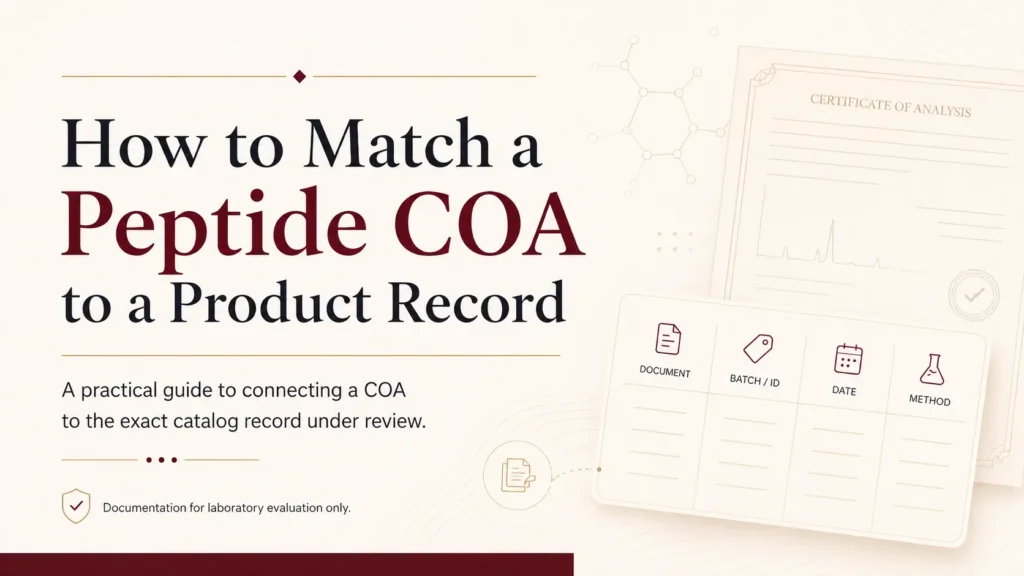
The practical review rule is simple: identify the component, identify the product, identify the lot, and keep the report result attached to that record.
This is especially important for blends because the component names are familiar across the catalog. A familiar name does not make two reports interchangeable. The GLOW page, the KLOW page, and each standalone component page should be reviewed as separate records unless the same product, lot, and document are being discussed.
Purity Collective GLOW 70mg product record
Purity Collective lists GLOW 70mg Peptide Blend as a lyophilized-vial product for qualified laboratory research. The listing identifies SKU PC-GLOW-70MG and a catalog total of 70mg across three listed components.
The current product page states the following component specifications and report results:
| Listed component | Catalog specification | Reported quantity result | Reported purity result |
|---|---|---|---|
| BPC-157 | 10mg | 9.92mg | 99.32% |
| TB-500 | 10mg | 9.92mg | 99.25% |
| GHK-Cu | 50mg | 50.5mg | 99.42% |
Those are component-specific results from the GLOW UPLC/MS report. They should not be collapsed into one blend-wide purity percentage, and they should not be copied to the standalone BPC-157, TB-500, or GHK-Cu product pages.
How to review the GLOW UPLC/MS document
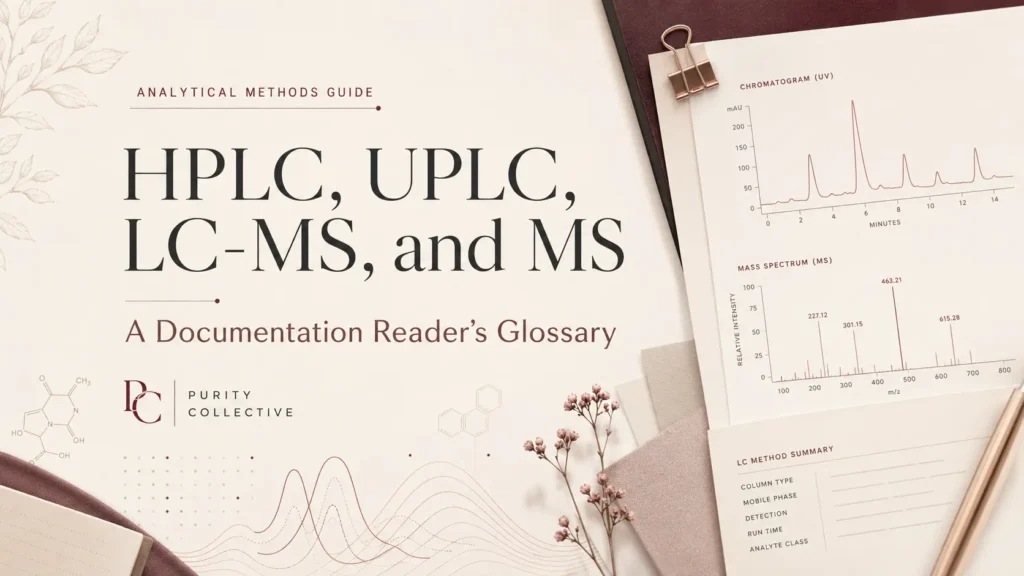
The GLOW page links a GLOW 70mg component UPLC/MS report. The product page states that the six-page report identifies lot PCCL-6203251 and includes a dedicated panel for each listed component.
The report structure matters. BPC-157, TB-500, and GHK-Cu each have their own panel, quantity result, and purity result. A reviewer should keep those values component-specific and sample-specific. The report does not create one single purity value for the blend.
The page also states that the UPLC/MS report records March 29, 2026 as the analysis date and March 31, 2026 as the received date. That chronology should remain visible in the review record rather than being silently corrected.
How to review the GLOW endotoxin document
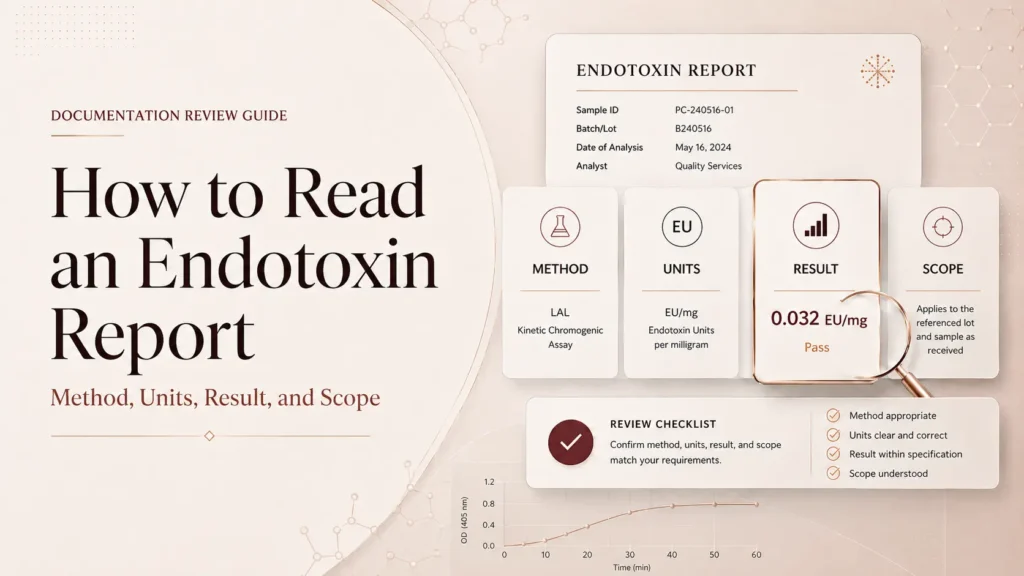
The product page also links a separate GLOW 70mg endotoxin document. The page states that the document identifies the three-component formulation under related lot PCCL-6203251-E and records a result below 0.05 EU/mL.
The limitation is important: the endotoxin document does not print an acceptance specification. It also lists April 3, 2026 as the analysis date and April 8, 2026 as the received date. That means the endotoxin result should not be rewritten as a pass statement or a broader suitability statement.
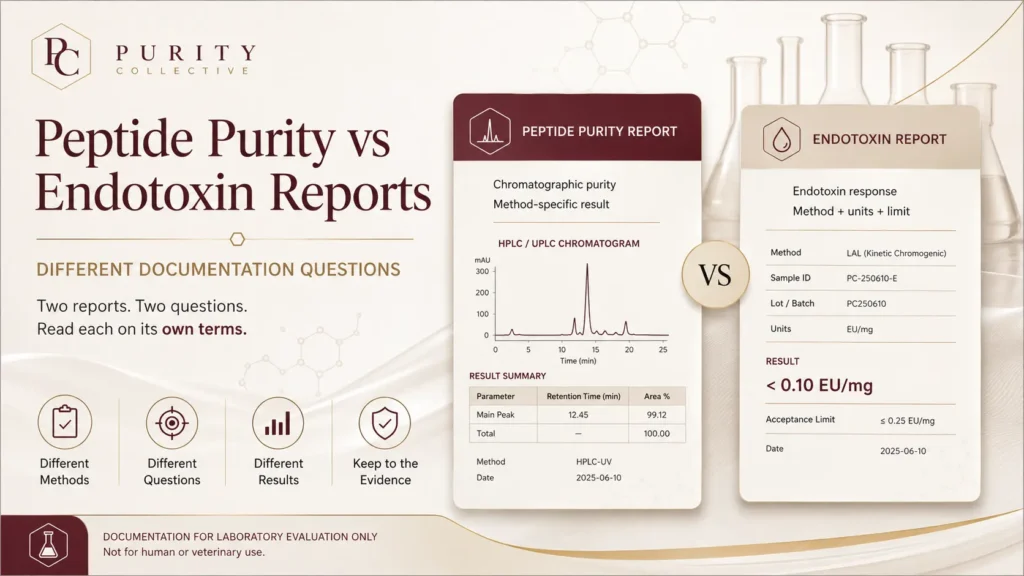
The UPLC/MS and endotoxin files answer different analytical questions. One record breaks out component identity, quantity, and purity fields. The other reports an endotoxin value for the related formulation lot. Keeping them separate makes the product record easier to evaluate.
GLOW 70mg vs KLOW 80mg
GLOW and KLOW 80mg Peptide Blend are related catalog records, but they are not interchangeable. GLOW lists BPC-157 10mg, TB-500 10mg, and GHK-Cu 50mg. KLOW lists those same three specifications plus KPV 10mg.
KPV also has its own public identity record and Purity Collective has a KPV research records and KLOW blend review guide. That guide is useful for understanding KPV/KLOW boundaries, but KLOW’s documents still belong to KLOW. GLOW’s documents belong to GLOW.
The safest comparison is catalog-to-catalog and document-to-document: compare the listed components, lot identifiers, report panels, dates, and limitations without moving results between products.
A practical GLOW review checklist
- Confirm the exact product URL: GLOW 70mg Peptide Blend.
- Match the catalog formulation to the procurement request: BPC-157 10mg, TB-500 10mg, and GHK-Cu 50mg.
- Keep the 9.92mg, 9.92mg, and 50.5mg quantity results tied to the GLOW UPLC/MS report and lot PCCL-6203251.
- Keep the 99.32%, 99.25%, and 99.42% purity results component-specific.
- Keep the below-0.05 EU/mL value tied to the GLOW endotoxin document and related lot PCCL-6203251-E.
- Record the analysis-before-receipt sequences and the missing printed endotoxin acceptance specification.
- Compare GLOW and KLOW as separate blend records with separate lots and documents.
GLOW peptide blend FAQs
What is in the GLOW 70mg peptide blend?
The catalog formulation lists BPC-157 10mg, TB-500 10mg, and GHK-Cu 50mg, for a listed total of 70mg in one lyophilized vial.
Does GLOW 70mg have one blend-wide purity result?
No. The product page states that the UPLC/MS report presents separate purity results for BPC-157, TB-500, and GHK-Cu. Each value should stay attached to its component panel.
Which GLOW documents are linked?
The product page links a six-page component UPLC/MS report and a separate endotoxin document. Each file should be reviewed as its own record with its own lot, dates, specifications, and results.
How is GLOW different from KLOW?
GLOW lists BPC-157, TB-500, and GHK-Cu. KLOW lists those same three specifications plus KPV 10mg. Their analytical documents belong to different blend records.
Can standalone GHK-Cu or BPC-157 documents support GLOW?
No. Standalone product documents belong to their own product pages and lots. They can support standalone product review, not the GLOW blend record.
Is GLOW intended for human use on this site?
No. Purity Collective’s GLOW listing is for qualified laboratory research only and is not for human or veterinary use.