
BPC-157 research guide
BPC-157 is a peptide name that appears in research-product catalogs, public chemistry databases, and FDA compounding discussions. The short search term can hide several different questions: What identity record is being referenced? Which commercial product page is being evaluated? Are the linked analytical documents tied to that exact listing? And what should not be inferred from a product document?
This guide answers those questions for Purity Collective’s BPC-157 research records. It is written for catalog and document review only. It does not provide human-use instructions, veterinary-use instructions, preparation instructions, or outcome claims.
BPC-157 identity at a glance
PubChem lists BPC-157 under CID 9941957 with formula C62H98N16O22. Public identity records are useful for name matching, but they are not the same thing as a product-specific lot document, supplier qualification review, or acceptance decision.
The FDA’s 2026 briefing document on BPC-157-related bulk drug substances describes BPC-157 as also known as Bepecin or PL-14736 and notes that the nominations under review had inconsistent information about whether the proposed substance was BPC-157 acetate or BPC-157 free base. That distinction matters because a product page should not collapse different substance names, salts, quantities, formats, and documents into one vague promise.
Current FDA context for BPC-157-related bulk substances
FDA’s 2026 Pharmacy Compounding Advisory Committee briefing document is not a product page and is not a Purity Collective document. It is useful context because it shows why BPC-157 naming and characterization need to be handled carefully. In that document, FDA says BPC-157 free base and BPC-157 acetate were evaluated after withdrawn nominations and that the available record raised characterization and evidence limitations.
FDA’s broader 503A bulk-substance page explains that Category 2 substances are nominated substances for which FDA has identified significant safety risks relating to compounding while further evaluation is pending. For SEO work, the takeaway is simple: do not write BPC-157 pages as medical guidance, and do not use broad search demand as a reason to imply suitability outside qualified research catalog review.
How Purity Collective organizes BPC-157 records
Purity Collective currently separates BPC-157-related catalog pages by exact listing:
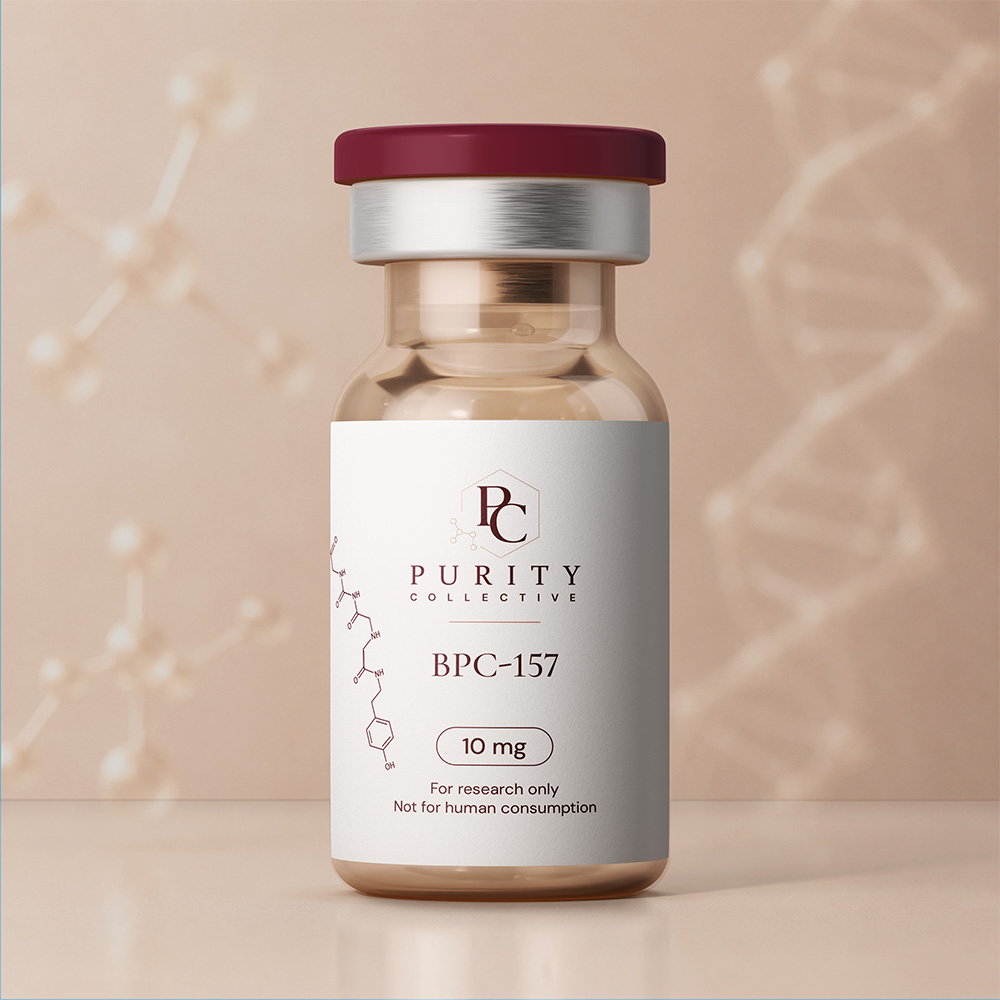
- BPC-157 10mg: a single-component research listing with product-level analytical documents linked from the page.
- BPC-157 + TB-500 10mg: a blend listing that should be evaluated as its own record, not as a substitute for the single-component page.
- BPC-157 and TB-500 research-record guide: a broader comparison article for understanding how the two names appear across catalog records.
This separation is important. A visitor may search “BPC-157” broadly, but the product decision belongs to the exact page, exact quantity, exact document links, and exact research-use boundary.
How to review BPC-157 product documents
Start with product-to-document matching. The document should be reviewed beside the product page where it appears. Check the product name, quantity, report type, batch or lot reference, report date, and method before relying on any result language.
A UPLC/MS or similar analytical report may help a reviewer understand identity-related and chromatographic information for a submitted sample. An endotoxin document addresses a different analytical question. Neither document should be rewritten as a blanket claim about every vial, a complete quality system, or a statement of human or veterinary suitability. A submitted-sample result is not a universal claim.
For a step-by-step explanation of these boundaries, use the Purity Collective peptide COA guide.
BPC-157 10mg vs BPC-157 + TB-500 10mg
The single-component BPC-157 10mg page and the BPC-157 + TB-500 10mg blend page should not be treated as the same page with different wording. The blend page has component-specific document questions. The single-component page has its own product identity and document links.
That difference affects internal linking and metadata. The broad BPC-157 guide can explain naming and document review, but the commercial page should stay exact: product name, stated quantity, research format, linked documents, price, stock status, and the checkout path for qualified laboratory procurement.
What the current BPC-157 documents can—and cannot—support
Current linked documents can support a more transparent product record when they are tied to the exact listing. They can help a qualified reviewer see which report type is available and which product record it belongs to.
They cannot support claims about human results, veterinary results, suitability, every-batch sameness, or broad quality promises outside the document’s scope. They also do not change FDA status context. BPC-157 content on this site should stay inside research catalog review and document interpretation.
A practical BPC-157 review checklist
- Confirm whether the visitor needs the BPC-157 10mg listing or the BPC-157 + TB-500 10mg blend.
- Open the documents linked from that exact product page.
- Check product name, quantity, report type, batch or lot reference, and date.
- Read UPLC/MS and endotoxin documents as separate analytical questions.
- Use the COA guide to separate document evidence from unsupported claims.
- Keep the review inside qualified laboratory research.
BPC-157 FAQs
What is BPC-157?
BPC-157 is a peptide name listed in public chemistry records and FDA compounding-review materials. For product evaluation, the name should be matched to the exact commercial listing and document package being reviewed.
Is BPC-157 the same as a BPC-157 + TB-500 blend?
No. A single-component BPC-157 listing and a BPC-157 + TB-500 blend listing are separate catalog records. Their product pages, quantities, and linked documents should be reviewed separately.
Which BPC-157 page should I review first?
Start with the exact record that matches the intended catalog item: BPC-157 10mg for the single-component listing or BPC-157 + TB-500 10mg for the blend listing.
What can a BPC-157 analytical document show?
A linked analytical document can help a reviewer evaluate the report type, sample identity information, date, and stated result for the submitted sample. It should not be treated as a universal claim beyond that document’s scope.
Does FDA context change how BPC-157 pages should be written?
Yes. FDA’s BPC-157-related compounding materials reinforce the need for careful naming, status boundaries, and document-specific language rather than broad claims.
Is BPC-157 intended for human use on this site?
No. Purity Collective’s BPC-157 listings are for qualified laboratory research only and are not for human or veterinary administration.