
GHK-Cu research guide
GHK-Cu is a short way to describe a copper complex associated with glycyl-L-histidyl-L-lysine, often seen in ingredient databases and research-product catalogs under names such as copper tripeptide, copper tripeptide-1, GHK copper, or prezatide copper. Those names can look interchangeable in search results, but they do not always mean the same commercial record, quantity, format, or analytical-document package.
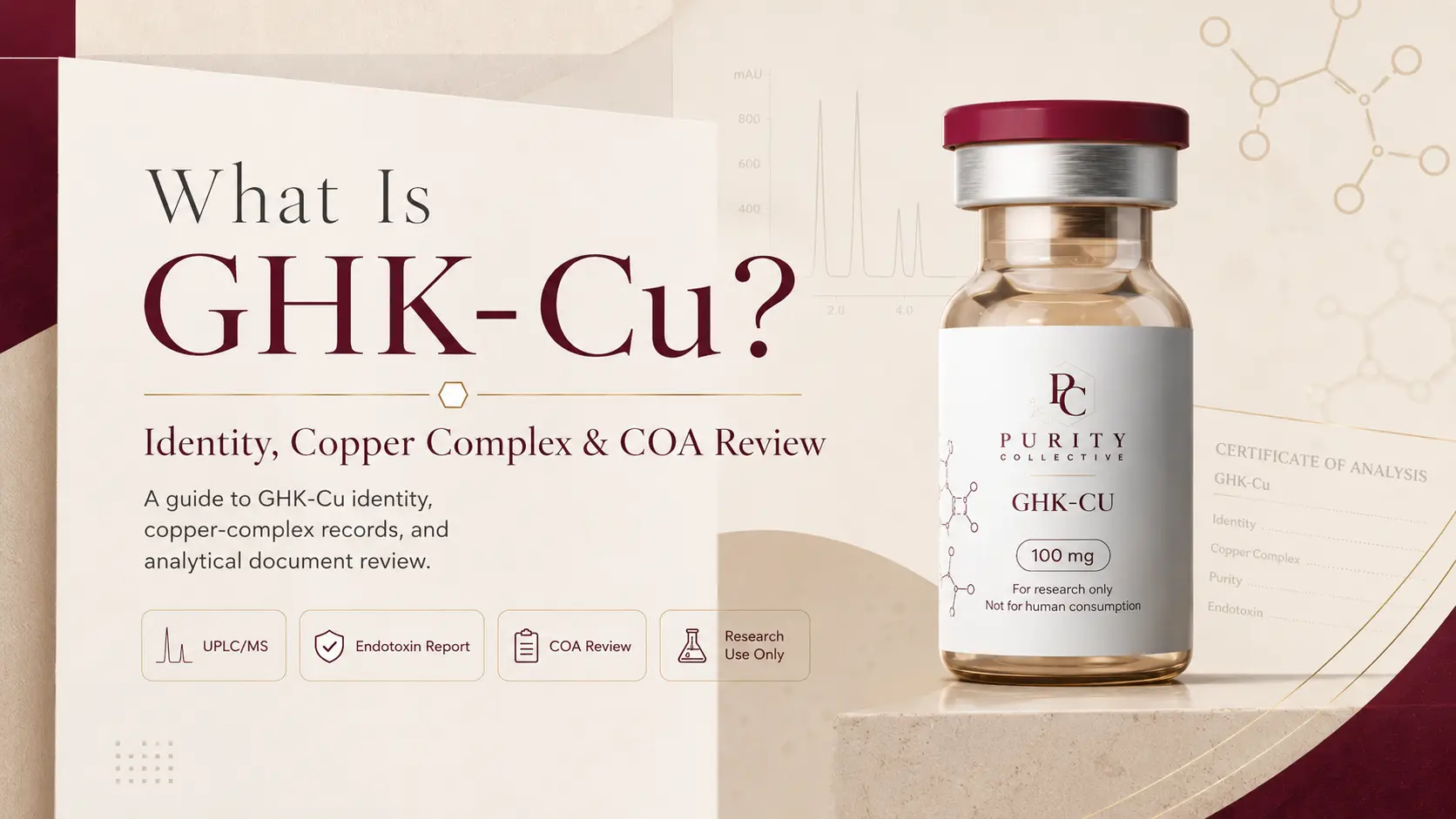
This guide keeps the question narrow: what the GHK-Cu name refers to, how Purity Collective separates the 50mg and 100mg research listings, and how to review the available UPLC/MS and endotoxin documents without turning a document result into an unsupported quality, safety, suitability, or outcome claim.
GHK-Cu identity at a glance
The FDA’s Substance Registration System lists prezatide copper with UNII 6BJQ43T1I9, formula C14H22N6O4.Cu, and synonyms that include copper tripeptide-1, GHK complex with copper, GHK copper, and related copper-peptide names. The same FDA record also states an important boundary: UNII availability is based on scientific identity characteristics and does not imply regulatory review or approval.
PubChem’s copper tripeptide record lists GHK-Cu as a depositor-supplied synonym, connects the compound to the parent tripeptide glycyl-L-histidyl-L-lysine, and reports computed identifiers and properties for the copper-associated structure. For product-page work, those public identity records are useful for naming discipline. They are not a substitute for a product-specific lot document, and they should not be rewritten as proof that a commercial vial matches a separate reference material.
Why GHK-Cu naming can get messy
Searchers often use short terms like GHK-Cu, GHK copper, copper peptide, or copper tripeptide. A catalog page has to be more precise. It should identify the listed product, the stated quantity, the format, the SKU or batch where visible, and the analytical documents that apply to that listing.
That is why Purity Collective separates GHK-Cu 50mg and GHK-Cu 100mg as distinct research-product records. A visitor may search the broad identity term, but the purchase decision happens at the exact listing level: 50mg versus 100mg, each with its own page, price, product image, and document links.
How the Purity Collective GHK-Cu listings are organized
The current GHK-Cu vial listings are organized around a simple research-catalog pattern:
- GHK-Cu 50mg: a lyophilized vial listing with UPLC/MS and endotoxin documents linked from the product page.
- GHK-Cu 100mg: a separate lyophilized vial listing with its own UPLC/MS report and endotoxin report linked from the product page.
- Radiance category placement: both vial listings sit in the Radiance collection for catalog navigation, not as a promise about appearance, biological effects, or human outcomes.
- Research-use boundary: the listings are for qualified laboratory research and are not for human or veterinary administration.
The goal is not to make every search term sound commercial. The goal is to help qualified visitors move from a broad identity question to the exact product record they meant to evaluate.
How to review a GHK-Cu analytical document
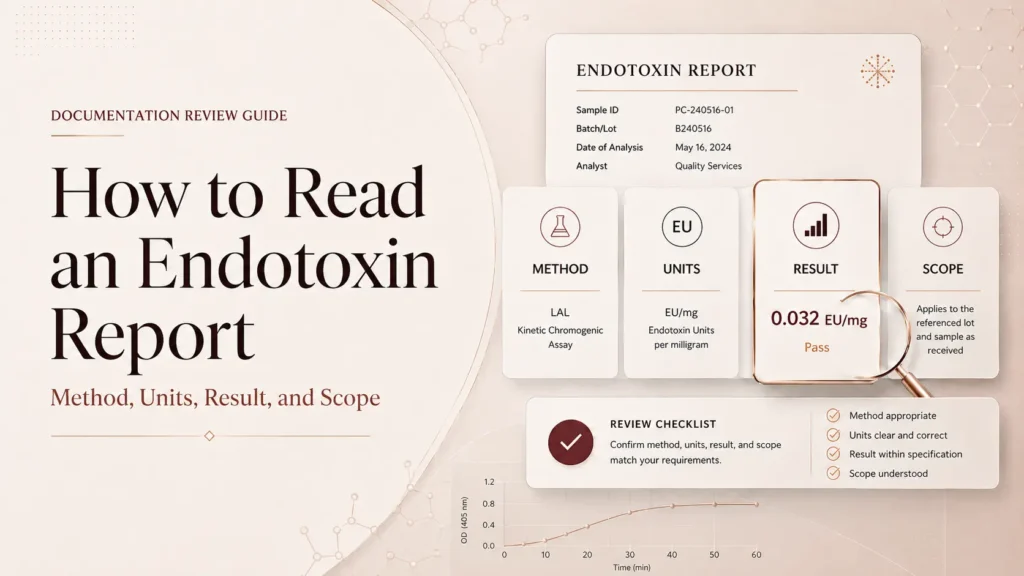
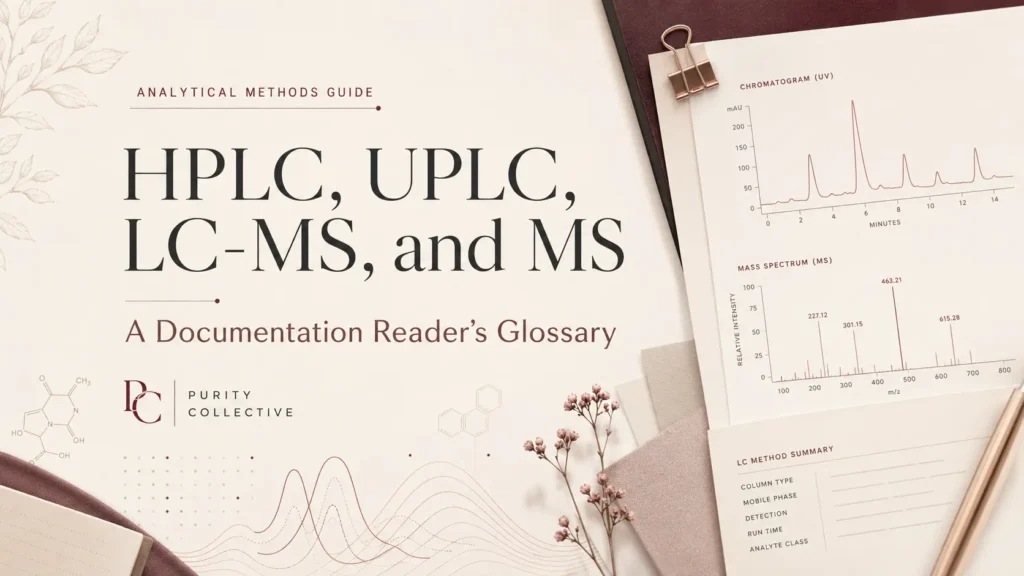
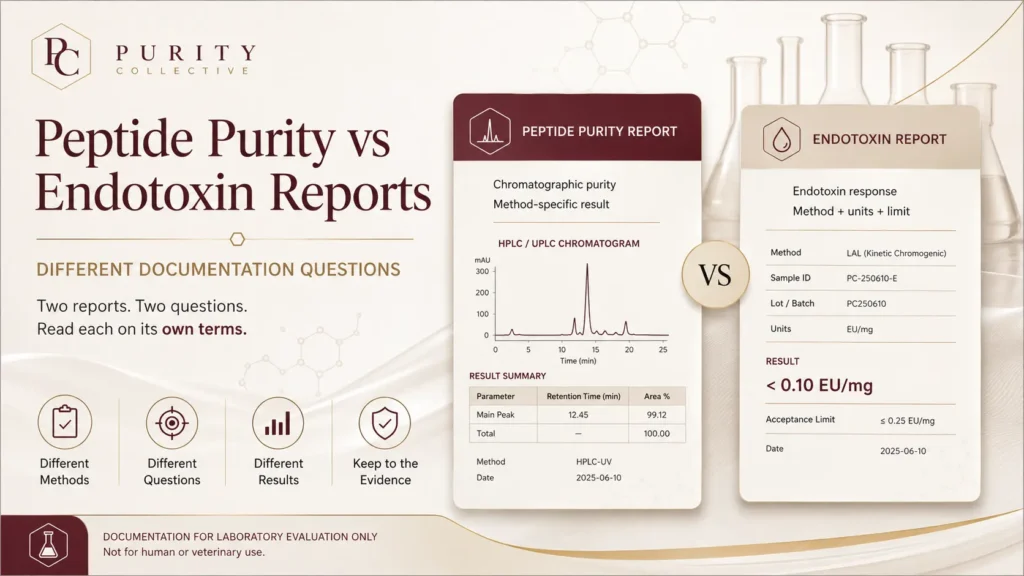
A GHK-Cu product page can link to more than one document because each document answers a different question. A UPLC/MS report may help a reviewer evaluate identity-related and chromatographic information for a submitted sample. An endotoxin report is a separate document with a different analytical scope. One does not replace the other.
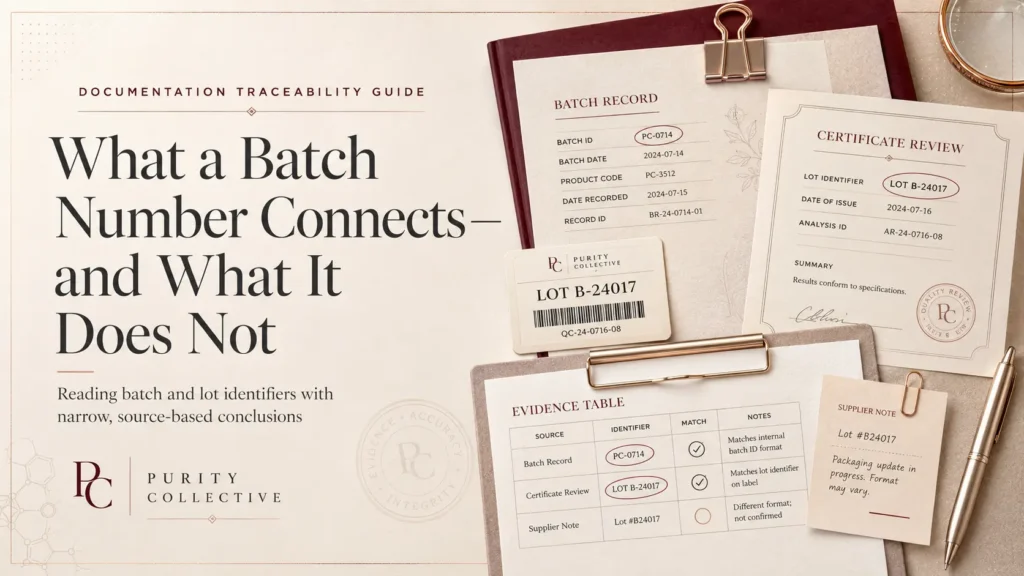
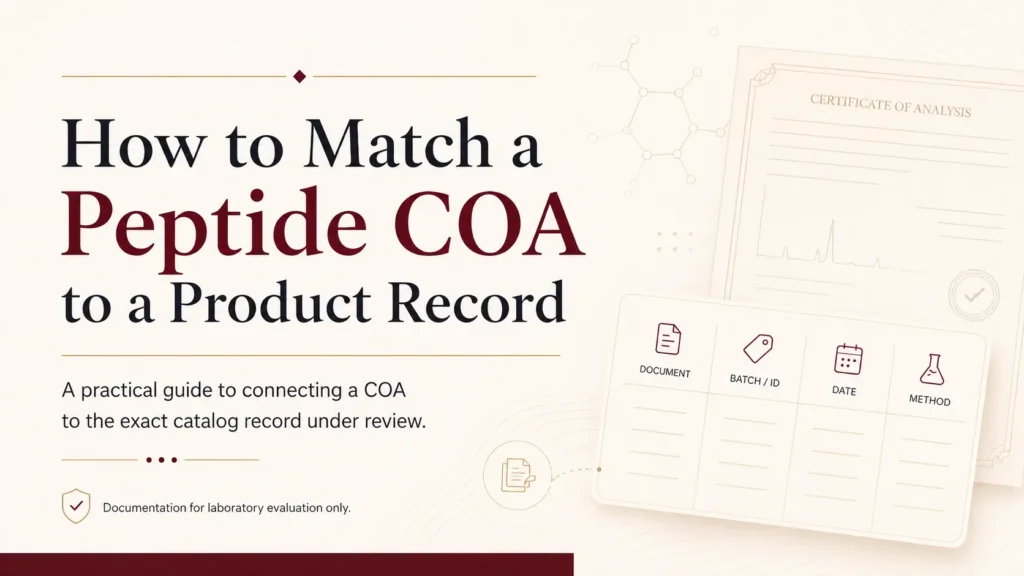
When reviewing the linked documents, start with product-to-document matching. Confirm that the product name, quantity, lot or batch reference, date, and report type match the listing you are evaluating. Then read the result in context: a value tied to a submitted sample is not a universal claim about every future vial, not a complete quality system, and not proof of human suitability.
For a deeper walkthrough, use Purity Collective’s peptide COA reading guide. It explains how to separate identity review, chromatographic purity, mass confirmation, endotoxin documentation, dates, and report limitations.
GHK-Cu 50mg vs 100mg: what should actually change?
The difference between the two commercial pages should be practical, not exaggerated. The quantity changes. The specific product URL changes. The document links and visible batch records should be reviewed at the matching page level. The research-use boundary does not change.
That distinction matters for SEO and compliance. A 100mg page should not borrow the 50mg page’s report language unless the document clearly applies to that exact listing. A 50mg page should not inherit a 100mg document just because the broad compound name is similar. Each quantity deserves its own document check, its own metadata, and its own copy boundaries.
What the current documents can—and cannot—support
The available GHK-Cu documents can support a clearer product record when they are used carefully. They can help a qualified reviewer see which report is linked to the listing and what kind of analytical question the report addresses. They can also make the product page more transparent than a page that only lists a name, size, and price.
They cannot support broad claims that every batch is identical, that a result establishes complete suitability, or that the product has any human outcome. They also do not turn an ingredient identifier into a drug approval. For this site, GHK-Cu pages should stay anchored to catalog identity, available documentation, and research-use limits.
A practical GHK-Cu product-page checklist
- Confirm whether the visitor needs the 50mg listing or the 100mg listing.
- Open the UPLC/MS report linked from that exact product page.
- Open the endotoxin report separately instead of assuming the UPLC/MS report answers that question.
- Match the visible batch or lot references before relying on any result language.
- Use the COA guide to interpret method, result, date, and scope.
- Keep the listing inside qualified laboratory research and do not infer human or veterinary use.
GHK-Cu FAQs
What is GHK-Cu?
GHK-Cu is commonly used as a shorthand for a copper-associated glycyl-L-histidyl-L-lysine record. Public identity databases also use related names such as copper tripeptide, copper tripeptide-1, GHK copper, and prezatide copper.
Are GHK-Cu and copper tripeptide-1 the same search intent?
They often overlap in search behavior, but a product page should still be exact. The catalog listing should state the product name, quantity, format, and documents that apply to that specific page rather than relying on broad synonym matching.
What is the difference between GHK-Cu 50mg and GHK-Cu 100mg?
The listed quantity and product record differ. Purity Collective maintains separate 50mg and 100mg pages so each listing can show its own price, URL, product information, and document links.
What documents are linked from the GHK-Cu product pages?
The current GHK-Cu vial pages link analytical documents such as UPLC/MS and endotoxin reports. Each document should be reviewed on the exact product page where it appears.
Does a GHK-Cu document prove human suitability?
No. A product-specific analytical report can help evaluate a submitted sample and report type, but it does not establish human suitability, veterinary suitability, or any outcome claim.
Where should a buyer start?
Start with the exact product listing: GHK-Cu 50mg or GHK-Cu 100mg. Then review the linked documents and the COA guide before checkout.