
Format guide · Nasal sprays
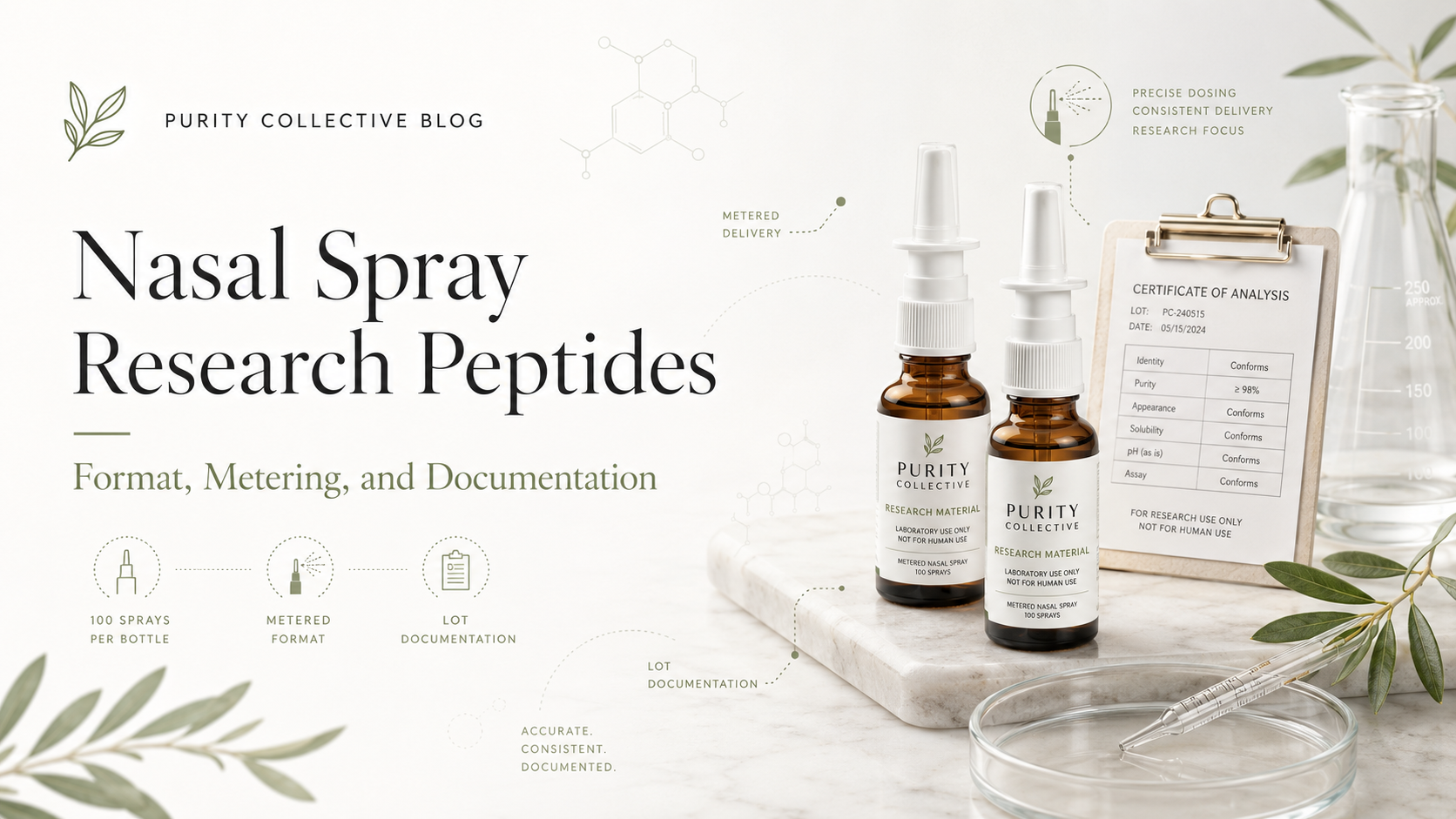
Purity Collective lists ten research peptides and related compounds in nasal-spray format. This guide links every spray listing, sets out what each one’s batch documentation does and does not cover, explains why a solution-format record needs fields a vial record does not, and summarizes what the published intranasal research on these compounds found, including the null trials.
For laboratory research only. Not for human or animal use. This guide gives no dosing, reconstitution, spraying or administration instructions of any kind.
-
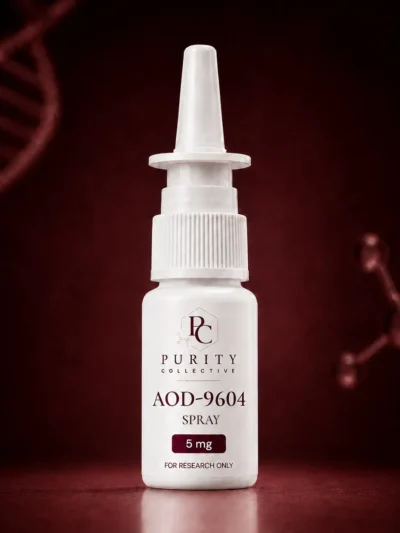
AOD-9604 Spray 5mg
$70.00 -
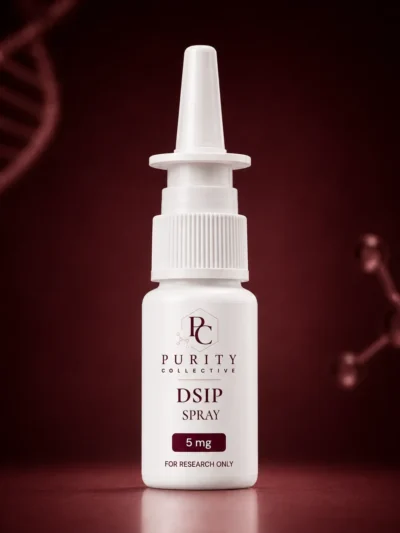
DSIP Spray 5mg
$85.00 -
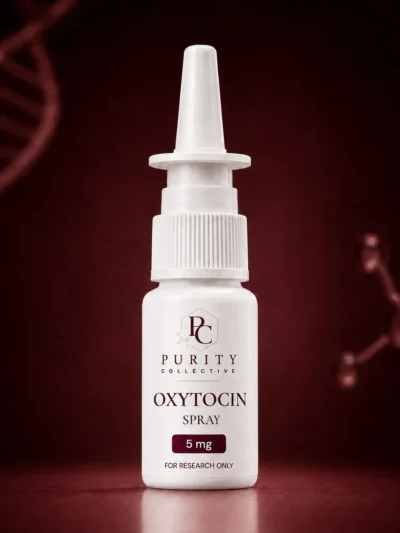
Oxytocin Spray 5mg
$69.00 -
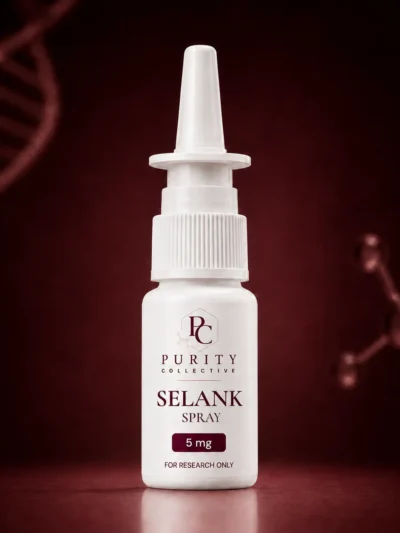
Selank Spray 5mg
$89.00 -
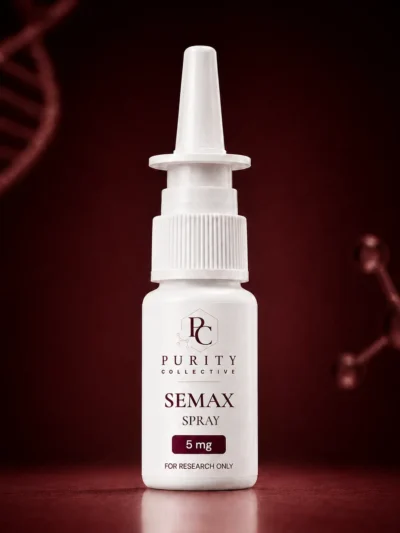
Semax Spray 5mg
$89.00 -
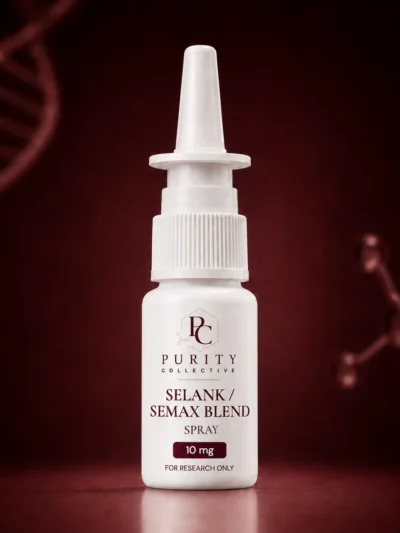
Selank + Semax Spray
$115.00 -
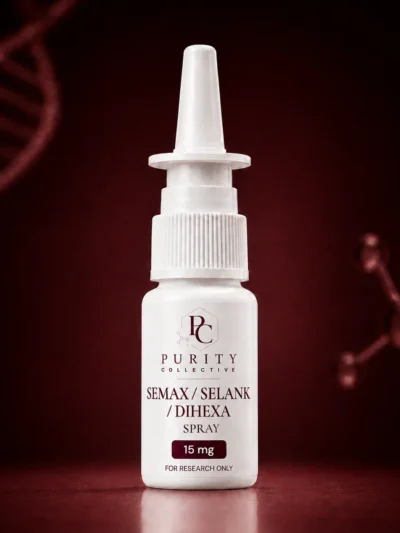
Semax + Selank + Dihexa Spray
$130.00 -
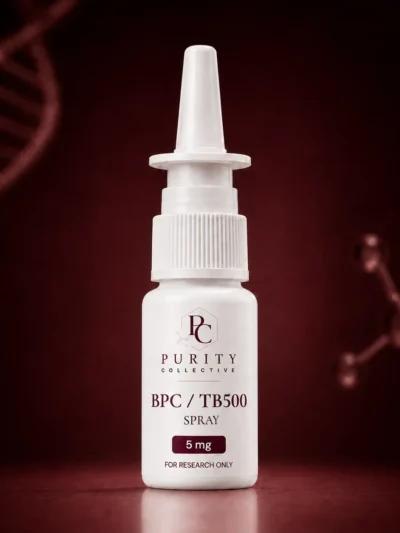
BPC-157 + TB-500 Spray 10mg
$110.00 -
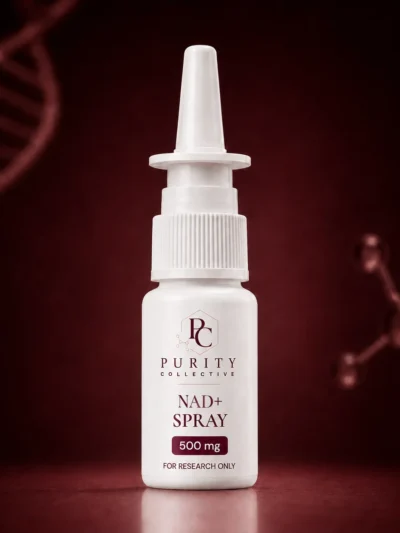
NAD+ Spray 500mg
$99.00 -
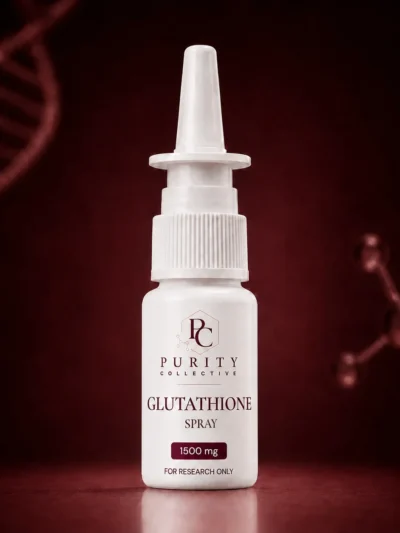
Glutathione 1500mg Spray
$115.00
Every spray listing and its documentation
The table lists all ten spray SKUs in the catalog as of October 1, 2026. Two have a spray-specific certificate that can be quoted; one has a linked certificate whose fields do not match the listing; seven have no spray-specific report. A certificate for a vial of the same compound does not document a spray, because the spray is a different product: a solution, with its own volume, concentration, excipients and stability.
| Spray listing | Spray-specific report | What it covers |
|---|---|---|
| AOD-9604 Nasal Spray 5mg | None posted | No spray-specific report. A vial report does not document the spray. |
| DSIP Nasal Spray 5mg | None posted | No spray-specific report. |
| Oxytocin Nasal Spray 5mg | None posted | No spray-specific report. |
| Selank Nasal Spray 5mg | None posted | No spray-specific report. The Selank 10mg vial report (lot PCCL-240644) covers the vial only. |
| Semax Nasal Spray 5mg | None posted | No spray-specific report. The Semax 10mg vial report (lot PCCL-1902514-P) covers the vial only. |
| Selank + Semax Nasal Spray | None posted | No spray-specific report. |
| Semax + Selank + Dihexa Nasal Spray | Linked, pending confirmation | Bioviridian COA3970 (lot 70-202604-88) is linked; its sample-name and client fields do not match this listing, so its results are not quoted here until confirmed. |
| BPC-157 + TB-500 Nasal Spray 10mg | Bioviridian COA7123, lot 80-202606-84 | Identity of both peptides by LC-MS/MS; content 5.34mg BPC-157 and 6.11mg TB-500; purity 99.9%. No volume, concentration, excipient or endotoxin line. |
| NAD+ Nasal Spray 500mg | Bioviridian COA7122, lot 80-202607-78 | Identity NAD+ by LC-MS/MS; content 504.27mg; purity 99.8%. No volume, concentration, excipient or endotoxin line. |
| Glutathione 1500mg Nasal Spray | None posted | No spray-specific report. |
Key facts. Two spray listings (NAD+ 500mg and BPC-157 + TB-500 10mg) have a Bioviridian certificate with identity by LC-MS/MS, content and purity. Neither certificate states fill volume, concentration, excipients or endotoxin. The Selank, Semax, Glutathione and AOD-9604 sprays, and the DSIP, Oxytocin and Selank + Semax sprays, have no spray-specific certificate. Every claim on this page about a compound comes from published research on that compound, not from the spray product.
Why a spray record needs more than a vial record
A lyophilized vial is a dry solid. Freeze-drying is used precisely because many peptides and proteins are more stable dry than in water[10967427]. A nasal spray is the opposite case: the peptide sits in solution for its whole shelf life, where it is exposed to hydrolysis, deamidation, oxidation, aggregation and adsorption to surfaces, the instability pathways that protein-formulation reviews have catalogued for decades[10460913][20143256]. Formulations manage this with buffers, tonicity agents, preservatives and sometimes absorption enhancers, and each of those choices is part of the product’s identity.
That is why the questions for a spray certificate are different. A vial certificate answers “how much peptide is in the vial, and how pure is it”. A spray certificate also needs to answer “in what volume, at what concentration, in what solvent and excipients, and with what endotoxin and microbial burden”. A total-content figure such as 504.27mg on its own does not tell a laboratory the concentration of what it is holding.
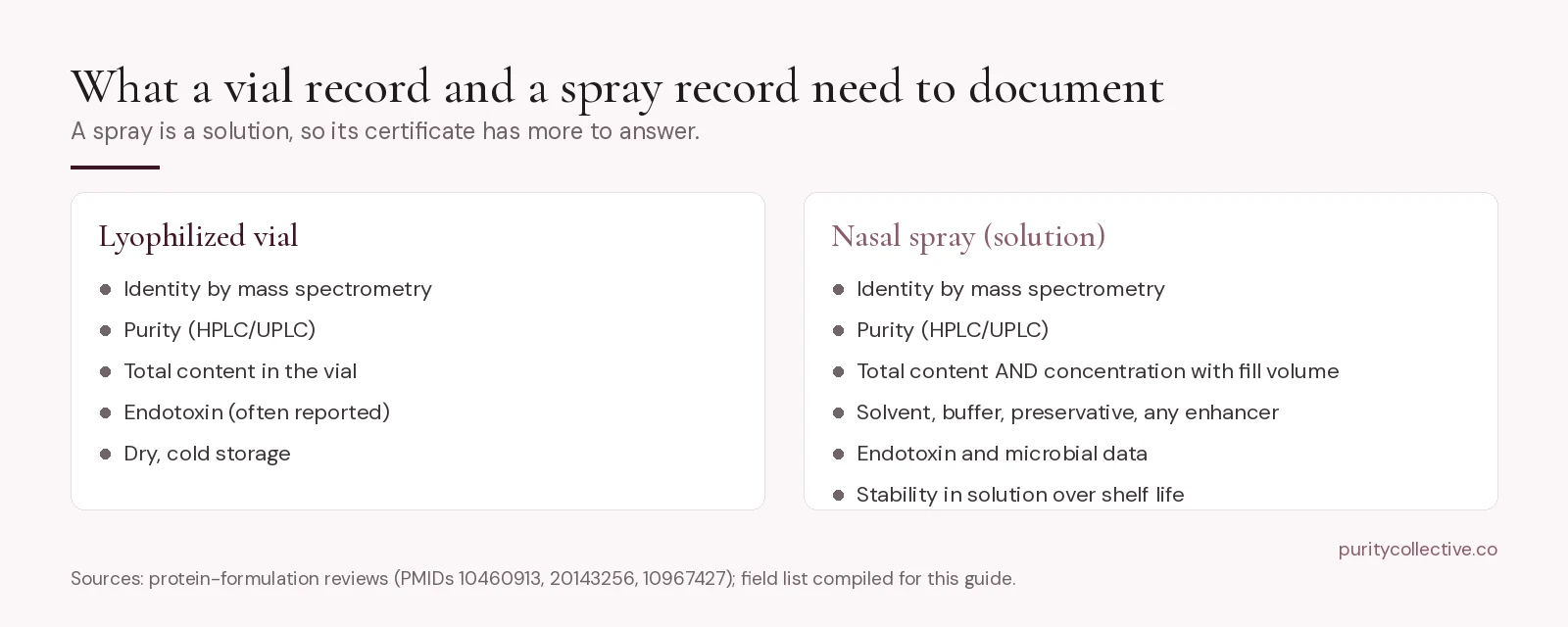
| Field | Lyophilized vial record | Nasal-spray record |
|---|---|---|
| Identity (MS or HPLC) | Expected | Expected |
| Purity | Expected | Expected |
| Quantity | Total mg in the vial | Total mg and concentration (mg/mL) with fill volume |
| Solvent and excipients | Usually none (dry powder) | Needed: buffer, preservative, any enhancer |
| Endotoxin / microbial | Endotoxin often reported | Endotoxin and preservative or microbial data relevant |
| Stability | Dry storage | In-solution stability over shelf life |
What the two quotable spray certificates show
NAD+ Nasal Spray 500mg (listing): Bioviridian certificate COA7122, lot 80-202607-78, issued July 17, 2026. Identity NAD+ by LC-MS/MS, content 504.27mg by HPLC quantitation, overall purity 99.8% by RP-HPLC at 214 nm. The certificate does not state the fill volume, concentration, excipients or an endotoxin result.
BPC-157 + TB-500 Nasal Spray 10mg (listing): Bioviridian certificate COA7123, lot 80-202606-84, issued July 4, 2026. Identity of both peptides by LC-MS/MS, content 5.34mg BPC-157 and 6.11mg TB-500, overall purity 99.9%. The same four fields are absent.
Semax + Selank + Dihexa Nasal Spray: a Bioviridian certificate (COA3970, lot 70-202604-88) is linked from the listing, but its sample-name and client fields do not match this listing. Until that is confirmed, this guide does not quote its results.
For the other seven sprays, a batch COA for the spray isn’t posted yet. Vial certificates exist for some of the same compounds, for example Selank 10mg (lot PCCL-240644) and Semax 10mg (lot PCCL-1902514-P), and they document only those vials.
What intranasal research on these compounds has studied
The nose is studied as a route because the nasal mucosa is thin and well vascularized, and because some material can travel along olfactory and trigeminal pathways toward the brain, though absorption of peptides is limited and variable[12618035][22119441]. The compound-level findings below are research findings about each compound, not properties of any product sold here.
Selank and Semax (mouse and rat)
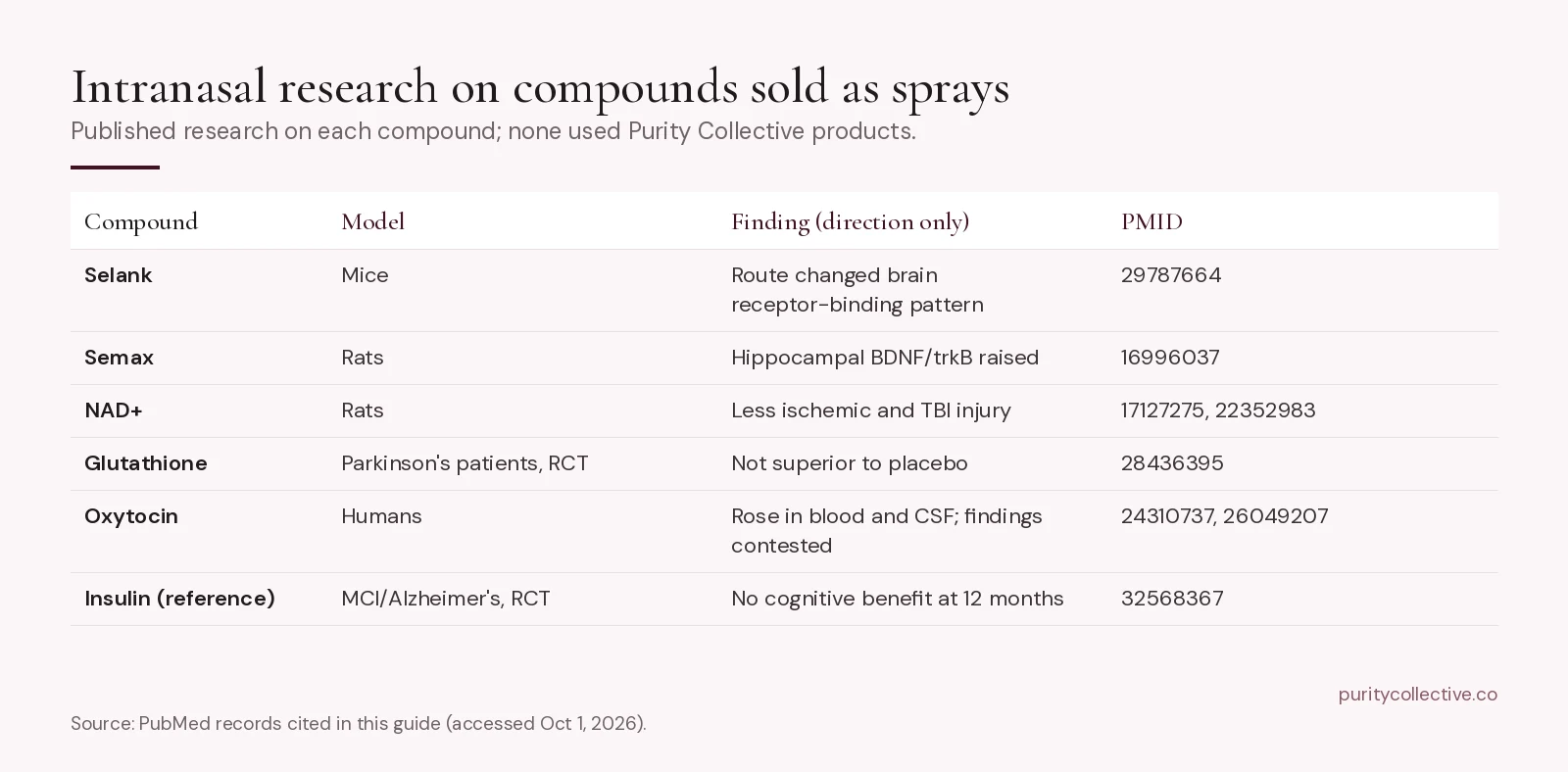
In two mouse strains, Selank given intranasally and intraperitoneally produced different receptor-binding changes in the brain, with the intranasal route affecting NMDA-receptor binding sites and the intraperitoneal route affecting GABA-receptor sites, which the authors attributed to route-specific pharmacokinetics[29787664]. In rats, a single Semax application raised hippocampal BDNF protein and trkB activation[16996037]. Both lines of work come largely from a small number of laboratories.
NAD+ (rat)
Intranasal NAD+ raised brain NAD+ content and reduced infarct size after transient focal ischemia in rats, while nicotinamide given the same way did not[17127275]; a later rat study reported less neuron death after traumatic brain injury[22352983]. There are no comparable human trials of intranasal NAD+ in this reference list.
Glutathione (humans, null)
In a phase IIb randomized trial in Parkinson’s disease, both intranasal glutathione groups improved, but neither was superior to placebo after three months, and the placebo response was unusually large[28436395].
Oxytocin (humans, contested)
A human study with paired blood and cerebrospinal fluid sampling found oxytocin rose in both after intranasal delivery, with different time courses and no correlation between the two[24310737]. A widely cited critique argues that much of the intranasal-oxytocin behavioral literature is underpowered and relies on questionable measurement methods[26049207].
AOD-9604 and DSIP
AOD-9604, a fragment of the lipolytic domain of human growth hormone, was studied orally in obese Zucker rats[11146367]; there is no published intranasal work on it in this list. DSIP has a long, inconsistent literature: a 2006 review called it “a still unresolved riddle” and noted that sleep-promoting activity was seen with some analogues but not DSIP itself in rabbits and rats[16539679].
What the evidence does not show
- No product-level data. None of the studies above used Purity Collective’s sprays, and no spray here has published stability data in solution.
- Nose-to-brain delivery of peptides is not established as reliable. Reviews describe it as possible but limited and variable[12618035][22119441], and the large intranasal insulin trial in mild cognitive impairment and Alzheimer disease found no cognitive or functional benefit over 12 months[32568367].
- Human intranasal trials of these compounds are few and mixed. Glutathione was not superior to placebo[28436395]; oxytocin findings are contested[26049207].
- Vial documentation does not transfer. A vial certificate says nothing about the concentration, excipients or stability of a spray of the same compound.
- Nothing here supports any use of a research spray in people or animals.
How to review a spray listing before ordering
Check that the certificate names the spray itself and its lot, not a vial of the same compound. Look for identity by mass spectrometry, purity, total content and volume or concentration, the solvent and excipients, and an endotoxin result. If any of those are missing, note it in your records and ask for them. For the general reading method, see how to read a peptide COA, how to read an endotoxin report and the COA library.
Frequently asked questions
Which nasal spray research peptides does Purity Collective sell in the USA?
Ten spray listings: AOD-9604, DSIP, Oxytocin, Selank and Semax sprays (5mg each), Selank + Semax, Semax + Selank + Dihexa, BPC-157 + TB-500 10mg, NAD+ 500mg and Glutathione 1500mg, all for laboratory research only.
Do the nasal sprays have COAs?
Two have a spray-specific certificate: NAD+ 500mg (Bioviridian COA7122) and BPC-157 + TB-500 10mg (COA7123). The Selank, Semax, Glutathione, AOD-9604, DSIP, Oxytocin and Selank + Semax sprays have no spray-specific report yet.
What is missing from the NAD+ spray COA?
It confirms identity by LC-MS/MS, 504.27mg content and 99.8% purity, but it does not state fill volume, concentration, excipients or an endotoxin result, which are the fields that describe a solution.
Can I use a vial COA to document a spray of the same peptide?
No. A spray is a solution with its own volume, concentration, excipients and stability. A vial certificate documents only that vial’s lot.
Does intranasal delivery get peptides into the brain?
Reviews describe nose-to-brain transport as possible but limited and variable. A large intranasal insulin trial found no cognitive benefit, and an intranasal glutathione trial was not superior to placebo.
References
- Illum L Nasal drug delivery–possibilities, problems and solutions. J Control Release. 2003;87:187-98. PMID 12618035 · doi:10.1016/s0168-3659(02)00363-2
- Lochhead JJ, Thorne RG Intranasal delivery of biologics to the central nervous system. Adv Drug Deliv Rev. 2012;64:614-28. PMID 22119441 · doi:10.1016/j.addr.2011.11.002
- Wang W Instability, stabilization, and formulation of liquid protein pharmaceuticals. Int J Pharm. 1999;185:129-88. PMID 10460913 · doi:10.1016/s0378-5173(99)00152-0
- Manning MC, Chou DK, Murphy BM et al. Stability of protein pharmaceuticals: an update. Pharm Res. 2010;27:544-75. PMID 20143256 · doi:10.1007/s11095-009-0045-6
- Wang W Lyophilization and development of solid protein pharmaceuticals. Int J Pharm. 2000;203:1-60. PMID 10967427 · doi:10.1016/s0378-5173(00)00423-3
- Vasil’eva EV, Kondrakhin EA, Salimov RM et al. [COMPARISON OF PHARMACOLOGICAL EFFECTS OF HEPTAPEPTIDE SELANK AFTER INTRANASAL AND INTRAPERITONEAL ADMINISTRATION TO BALB/c AND C57BL/6 MICE.]. Eksp Klin Farmakol. 2016;79:3-11. PMID 29787664
- Dolotov OV, Karpenko EA, Inozemtseva LS et al. Semax, an analog of ACTH(4-10) with cognitive effects, regulates BDNF and trkB expression in the rat hippocampus. Brain Res. 2006;1117:54-60. PMID 16996037 · doi:10.1016/j.brainres.2006.07.108
- Ying W, Wei G, Wang D et al. Intranasal administration with NAD+ profoundly decreases brain injury in a rat model of transient focal ischemia. Front Biosci. 2007;12:2728-34. PMID 17127275 · doi:10.2741/2267
- Won SJ, Choi BY, Yoo BH et al. Prevention of traumatic brain injury-induced neuron death by intranasal delivery of nicotinamide adenine dinucleotide. J Neurotrauma. 2012;29:1401-9. PMID 22352983 · doi:10.1089/neu.2011.2228
- Mischley LK, Lau RC, Shankland EG et al. Phase IIb Study of Intranasal Glutathione in Parkinson’s Disease. J Parkinsons Dis. 2017;7:289-299. PMID 28436395 · doi:10.3233/JPD-161040
- Striepens N, Kendrick KM, Hanking V et al. Elevated cerebrospinal fluid and blood concentrations of oxytocin following its intranasal administration in humans. Sci Rep. 2013;3:3440. PMID 24310737 · doi:10.1038/srep03440
- Leng G, Ludwig M Intranasal Oxytocin: Myths and Delusions. Biol Psychiatry. 2016;79:243-50. PMID 26049207 · doi:10.1016/j.biopsych.2015.05.003
- Ng FM, Sun J, Sharma L et al. Metabolic studies of a synthetic lipolytic domain (AOD9604) of human growth hormone. Horm Res. 2000;53:274-8. PMID 11146367 · doi:10.1159/000053183
- Kovalzon VM, Strekalova TV Delta sleep-inducing peptide (DSIP): a still unresolved riddle. J Neurochem. 2006;97:303-9. PMID 16539679 · doi:10.1111/j.1471-4159.2006.03693.x
- Craft S, Raman R, Chow TW et al. Safety, Efficacy, and Feasibility of Intranasal Insulin for the Treatment of Mild Cognitive Impairment and Alzheimer Disease Dementia: A Randomized Clinical Trial. JAMA Neurol. 2020;77:1099-1109. PMID 32568367 · doi:10.1001/jamaneurol.2020.1840