
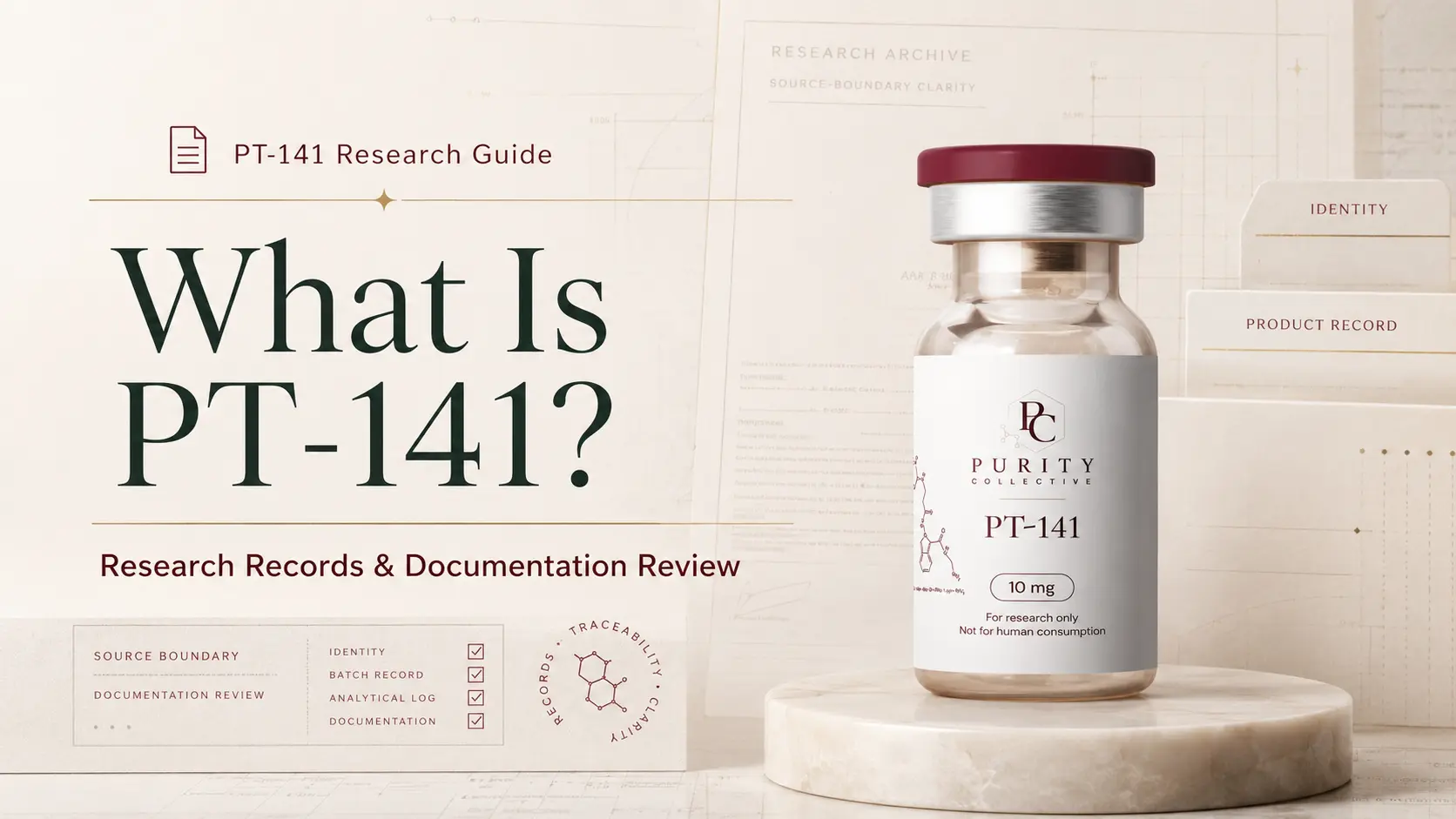
PT-141 research guide
PT-141 is a search term that can point to public chemistry records, FDA prescription-product records, research catalog pages, and product-specific analytical documents. Those records should not be blended together. A chemistry database can help confirm a name or formula. An FDA record can explain that a regulated prescription product exists. A Purity Collective product page shows what is listed for qualified laboratory procurement.
This guide keeps that separation visible. It is written for PT-141 identity review, product-page comparison, documentation checks, and internal linking only. It does not provide human-use instructions, veterinary-use instructions, preparation instructions, administration guidance, study-design guidance, clinical recommendations, or outcome claims.
PT-141 identity at a glance
PubChem lists Bremelanotide under CID 9941379, with formula C50H68N14O10. FDA review material for NDA 210557 describes bremelanotide as previously known as PT-141. Those public records are useful for name matching and status context. They are not product-specific lot documents for Purity Collective catalog pages.
The FDA prescribing-information record for Vyleesi confirms a regulated bremelanotide prescription product. That matters for search clarity because a visitor may use PT-141 and bremelanotide interchangeably. It does not mean a Purity Collective research listing is the FDA-approved product or carries the same labeling. A Purity Collective research listing should not borrow any prescription-product status.
Purity Collective PT-141 product records
Purity Collective currently has two PT-141 catalog records that should be reviewed separately:
- PT-141 10mg: a lyophilized vial listing with product-specific UPLC/MS and endotoxin documents linked from the product page.
- PT-141 Nasal Spray 10mg: a nasal-format catalog record that currently states no product-specific analytical PDF is linked.
Those two records should not inherit evidence from one another. The vial listing has visible analytical files tied to its product record. The nasal-format listing has a visible documentation-status disclosure. A buyer can compare both pages, but the document package from one page should not be used as proof for the other.
How to review the PT-141 10mg documents
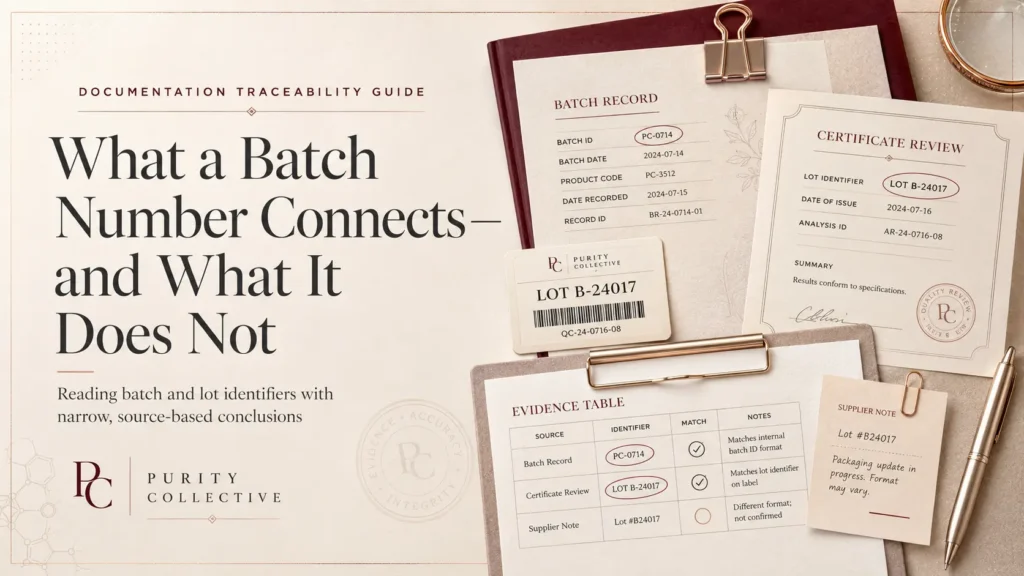
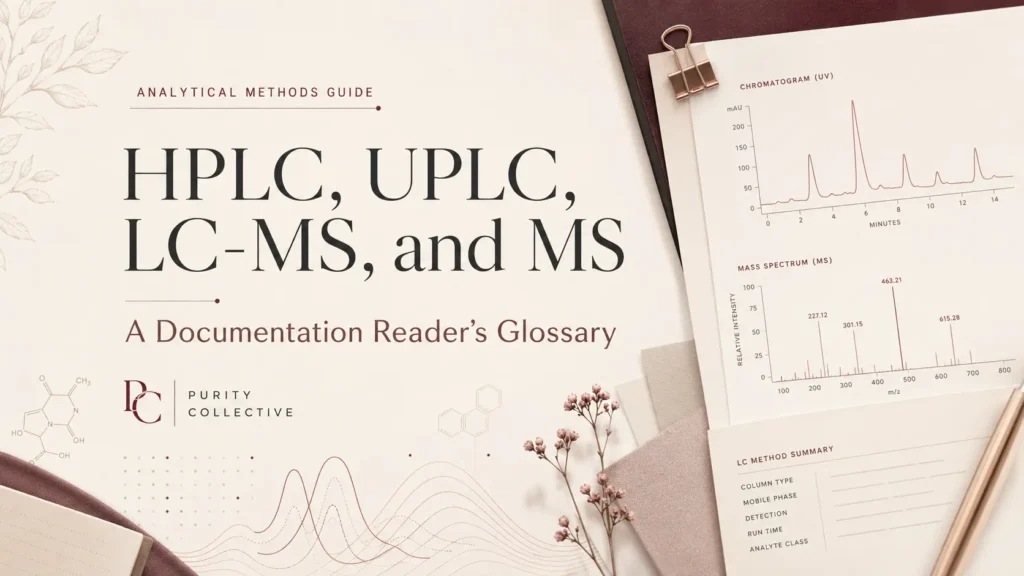
The PT-141 10mg product page links a UPLC/MS report for batch PCCL-2061592-P and a separate endotoxin report for related batch PCCL-2061592-E. The product page states that the UPLC/MS report lists a 10mg specification, a 9.79mg quantity result, and 99.25% purity for the tested sample.
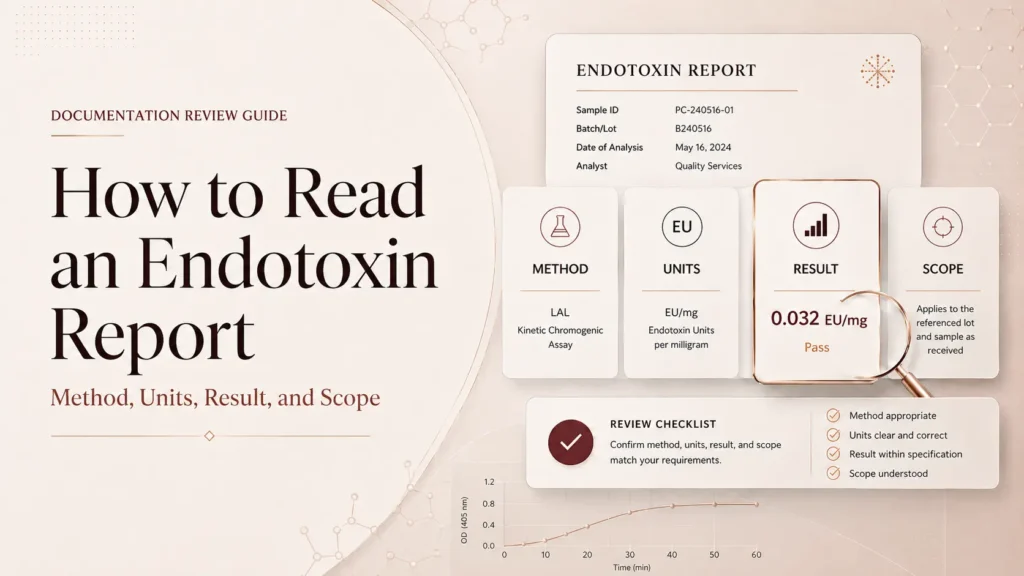
The endotoxin report is a separate record. The current product page states that it reports 0.075 EU/mL and does not print a separate acceptance specification. It also notes that both reports show May 4, 2026 as the analysis date and May 9, 2026 as the received date. Those date fields should be preserved exactly as printed rather than smoothed into a broader assurance.
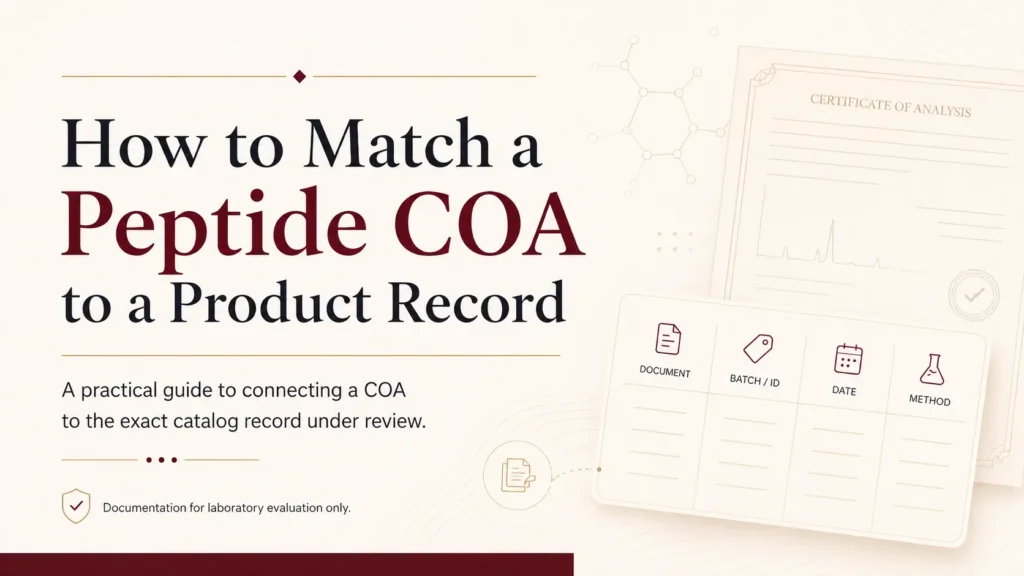
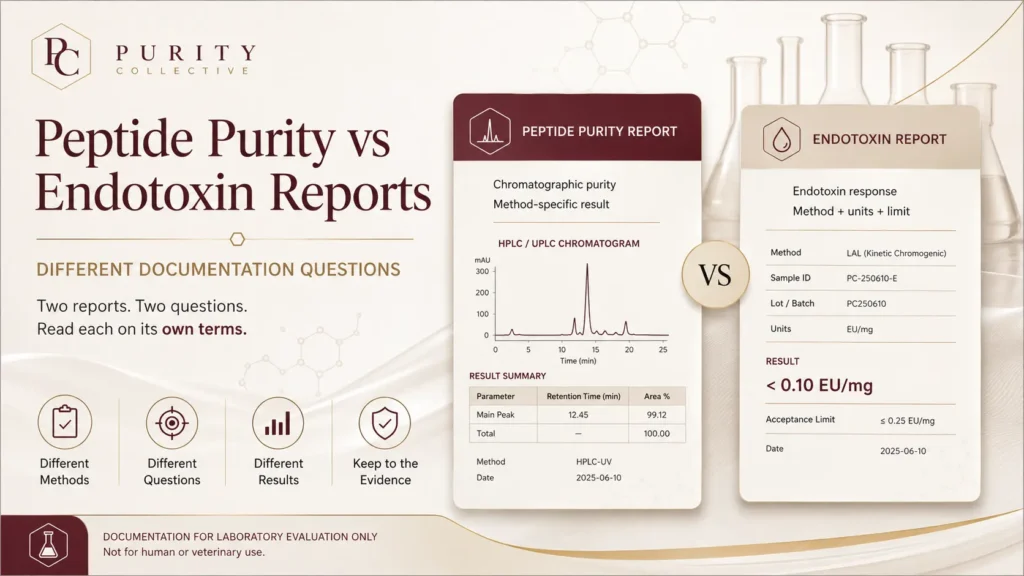
For procurement review, keep each value attached to its report, lot, method, date fields, and specification fields. A percentage is not a complete quality system. A quantity result is not a future-lot guarantee. A visible report is not evidence of human suitability. The COA review guide explains how to compare product records without stretching a sample result beyond its document.
How to review the PT-141 nasal-format page
The PT-141 Nasal Spray 10mg page is a separate catalog record. It identifies PT-141, SKU PC-PT-141-NASAL-SPRAY-10MG, and a listed size of 10 mg / 100 sprays. The page currently states that no product-specific analytical report is linked.
That documentation status should remain part of the review. The nasal-format page should not inherit the PT-141 10mg vial documents unless a current product record explicitly connects the exact listing and saleable lot. For broader format context, use the nasal-spray format guide. For document review, use the COA guide and request the applicable record when a procurement workflow requires current product-level evidence.
Why the source boundary matters
PT-141 is a good example of why SEO copy should slow down around names that appear in more than one record system. A search result may show the bremelanotide name, the PT-141 shorthand, a prescription-product reference, a vial listing, or a nasal-format catalog page. Those are not interchangeable proof points. Each source answers a different review question, and each should be cited only for the field it actually supports.
For Purity Collective, that means the commercial page should stay anchored to the saleable product record. Public sources can explain identity and naming context. Product pages can show SKU, format, listed quantity, price, inventory, and document status. Laboratory PDFs can show submitted-sample results. Keeping those layers separate makes the page more useful for qualified buyers and safer for search engines because the copy does not stretch one source into another source’s job.
PT-141 product-record checklist
- Confirm the exact page being reviewed: PT-141 10mg or PT-141 Nasal Spray 10mg.
- Match product title, SKU, listed quantity or size, format statement, and visible documentation status.
- For PT-141 10mg, keep the 9.79mg, 99.25%, and 0.075 EU/mL values tied to the specific reports where they appear.
- For the nasal-format page, preserve the no-linked-report disclosure until product-specific documents are attached.
- Use FDA and PubChem records for identity and status context, not as Purity lot-level evidence.
- Do not transfer prescription-product status, vial-report evidence, or nasal-format catalog fields across records.
PT-141 FAQs
What is PT-141?
PT-141 is a name associated with bremelanotide in public records. For Purity Collective review, the useful question is which catalog page, document package, and product-specific evidence are being evaluated.
Is Purity Collective’s PT-141 the FDA-approved product?
No. Public FDA records are cited for status context only. Purity Collective’s PT-141 listings are research catalog records and should not borrow prescription-product labeling or approval status.
Which Purity page has linked analytical documents?
The PT-141 10mg vial page currently links a UPLC/MS report and a separate endotoxin report. Those documents should be reviewed as product-page-specific records.
Does the PT-141 Nasal Spray 10mg page have a linked report?
The current nasal-format page states that no product-specific analytical PDF is linked. That disclosure should remain visible until an applicable record is attached.
Can the PT-141 10mg vial documents support the nasal-format listing?
No. The vial documents belong to the vial product record unless a current product document explicitly connects another exact listing and saleable lot.
Is PT-141 intended for human use on this site?
No. Purity Collective’s PT-141 listings are for qualified laboratory research only and are not for human or veterinary administration.