
MOTS-C research guide
MOTS-C is a peptide name that can appear in chemistry databases, regulatory-status pages, research catalogs, and product-level analytical reports. Those sources do different jobs. A public identity record can help confirm a name, formula, or synonym. A regulatory page can explain status context. A product page shows what Purity Collective lists for qualified laboratory procurement.
This guide keeps those records separate. It is written for identity review, quantity-variant comparison, analytical-document review, and internal linking only. It does not provide human-use instructions, veterinary-use instructions, preparation instructions, study-design guidance, clinical recommendations, or outcome claims.
MOTS-C identity and status context
PubChem lists Mots-c under CID 146675088, with formula C101H152N28O22S2. That public chemistry page is useful for identity matching, formula review, and synonym checks. It is not a Purity Collective lot document and should not be treated as proof for a saleable vial.
FDA’s page on certain bulk drug substances for compounding includes MOTS-C in its current safety-risk discussion. FDA’s 503A bulk-substance context also explains that some substances may have significant safety-risk concerns while evaluation is pending. Those FDA pages are cited here only for status context. They do not create product-level evidence for Purity Collective’s MOTS-C 10mg or 40mg listings, and they should not be rewritten as commercial product claims.
That distinction is important because search results can collapse status, identity, and product availability into one impression. A qualified review should separate those layers before any purchase decision is made. FDA context belongs in the status layer. PubChem belongs in the identity layer. Purity product pages and linked PDFs belong in the catalog and document-review layers.
Purity Collective MOTS-C product records
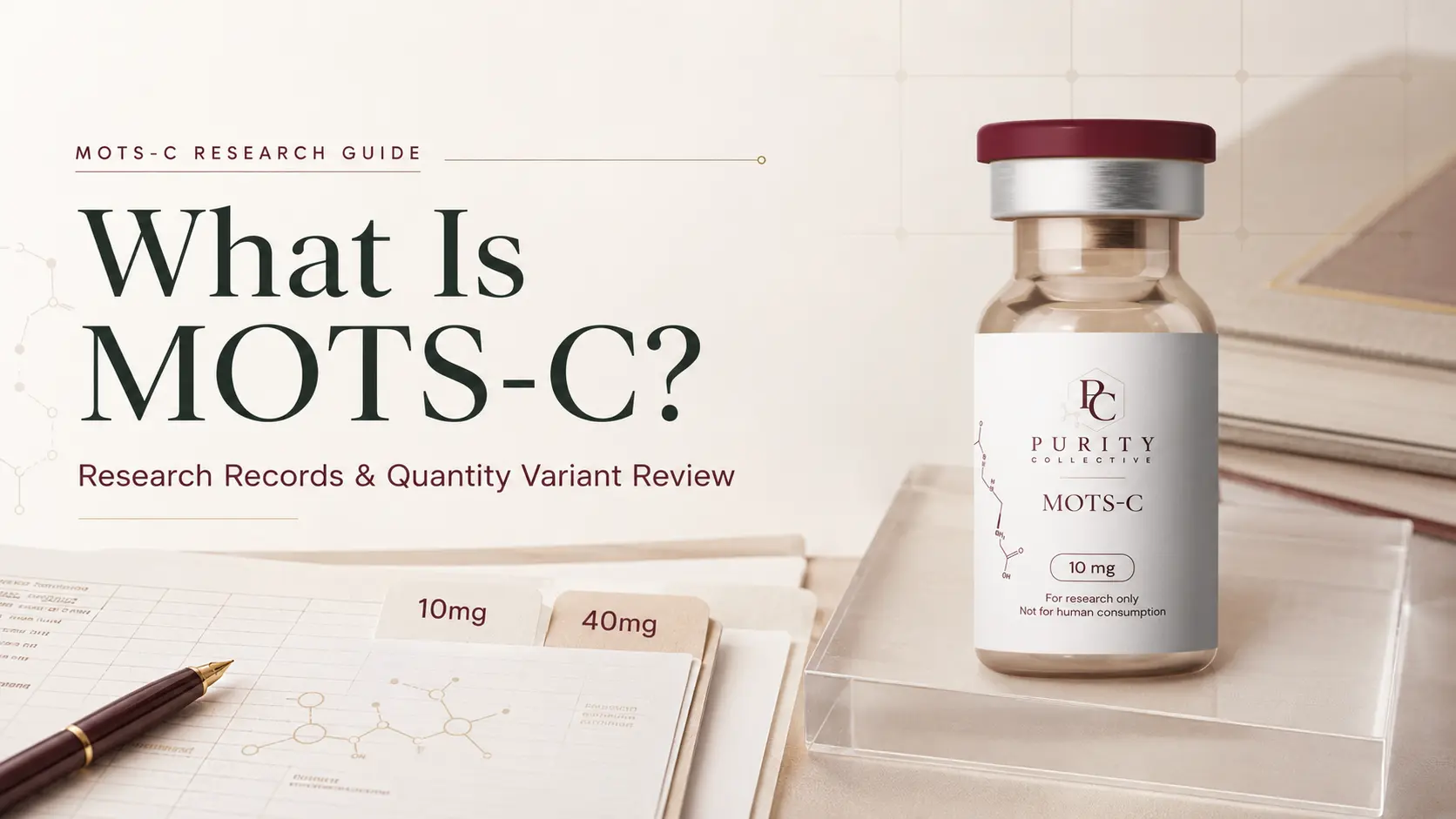
Purity Collective currently separates MOTS-C into two product records:
- MOTS-C 10mg: a lyophilized vial listing with linked UPLC/MS and endotoxin documents.
- MOTS-C 40mg: a separate lyophilized vial listing that currently discloses no product-specific analytical PDF.
The pages should be compared, not merged. Each quantity has its own SKU, stated quantity, and documentation state. A result from the 10mg page should not be transferred to the 40mg page unless a current product document explicitly connects the exact listing and saleable lot.
How to review the MOTS-C 10mg documents
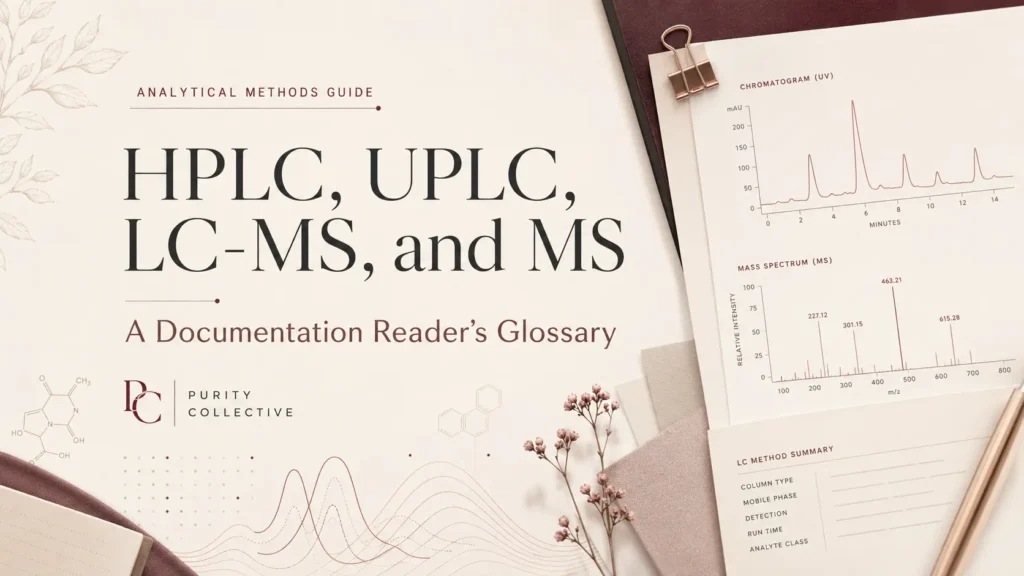
The MOTS-C 10mg page links a MOTS-C 10mg UPLC/MS report and a separate MOTS-C endotoxin report. The product page states that the UPLC/MS report identifies lot PCCL-8553761, records a 10.35mg measured quantity against a 10mg specification, and records a 99.28% purity result for the submitted sample.
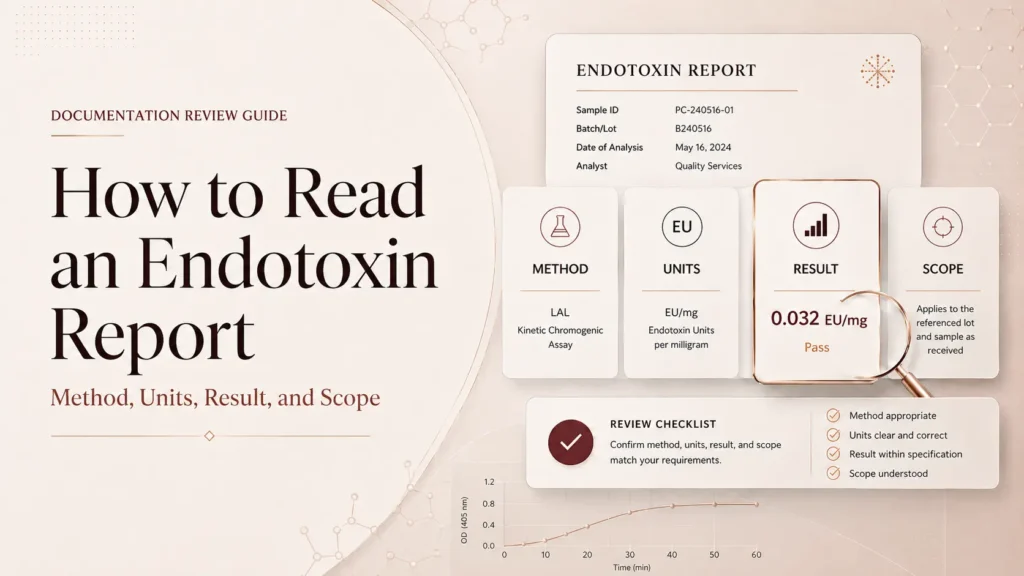
The endotoxin report is a separate record. The 10mg page states that it identifies lot PCCL-8553761-E, records a result below 0.05 EU/mL, does not print an endotoxin acceptance specification, and displays an analysis date earlier than the received date. Those fields should stay visible during review because they define the scope and limitations of the document.
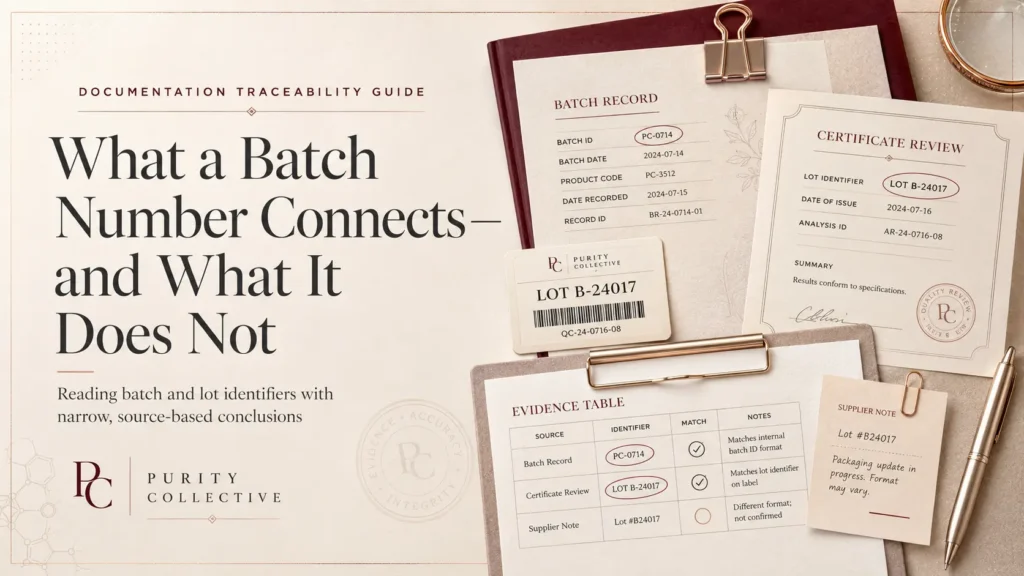
For procurement review, keep every number attached to its report, lot, method, date fields, specification fields, and product URL. A percentage is not a complete quality system. A submitted-sample result is not a future-lot promise. The COA review guide explains how to compare those fields without stretching a result beyond its source.
This approach also protects the useful commercial intent of the page. A buyer can see that MOTS-C 10mg has linked records and still understand the limits of those records. The result is clearer than a broad quality statement because it tells the reviewer exactly which file to open and which details to confirm.
How to review the MOTS-C 40mg documentation gap
The MOTS-C 40mg page is a distinct catalog record with SKU PC-MOTS-C-40MG. It currently states that no product-specific certificate, identity or purity report, or endotoxin report is attached at publication. That disclosure should remain visible until product-level documents are added and matched to the exact listing.
The 40mg page should not inherit the 10mg reports. The two pages have different quantities and SKUs, and the 10mg reports identify submitted samples named in those documents. If a 40mg document is supplied later, it should be checked independently for compound name, lot relationship, method, dates, specifications, and results before any public copy is expanded.
A visible documentation gap does not make the 40mg page useless. It gives procurement teams a precise next step: request the current product-specific documents and match them to the page before relying on a test-specific statement. Until that happens, the page should stay focused on product identity, listed quantity, SKU, format, and research-use boundary.
MOTS-C product-record checklist
- Confirm whether the review concerns MOTS-C 10mg or MOTS-C 40mg.
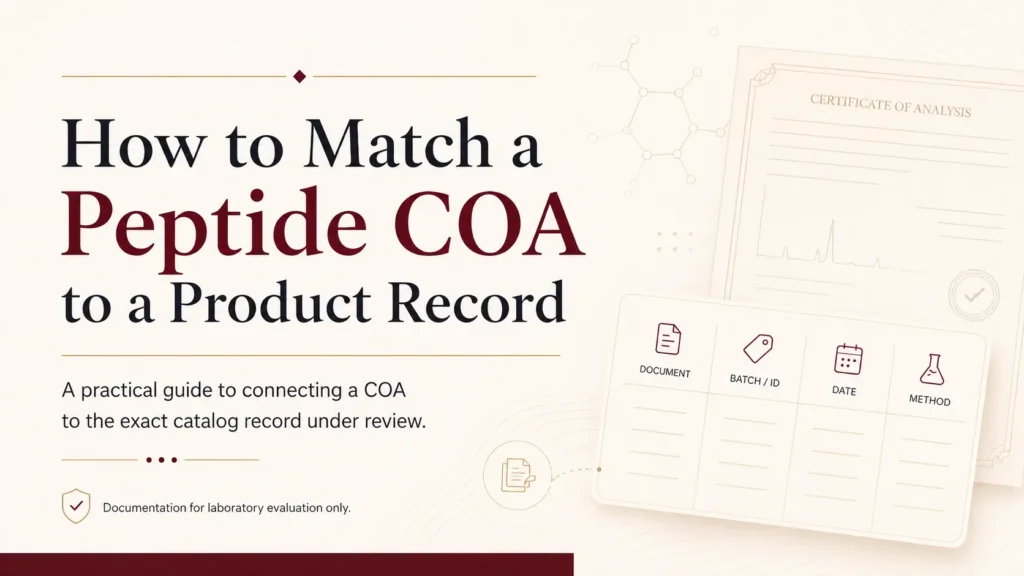
- Match product URL, title, SKU, listed quantity, format statement, and visible documentation status.
- For MOTS-C 10mg, keep the 10.35mg and 99.28% results tied to lot PCCL-8553761 and the UPLC/MS report.
- Keep the endotoxin result and date chronology tied to the separate endotoxin document.
- For MOTS-C 40mg, preserve the no-linked-report disclosure until product-specific documents are attached.
- Use PubChem and FDA pages for identity and status context, not as Purity lot-level evidence.
MOTS-C FAQs
What is MOTS-C?
MOTS-C is a peptide name listed in public chemistry records. For Purity Collective review, the practical question is which product page, quantity, SKU, and document package are being evaluated.
Which Purity Collective MOTS-C page has linked reports?
The MOTS-C 10mg page currently links a UPLC/MS report and a separate endotoxin report. Each should be reviewed as a product-page-specific document.
Does the MOTS-C 40mg page have product-specific documents?
The current 40mg page states that no product-specific analytical PDF is attached. Request and review the applicable records before relying on any test-specific statement for that listing.
Can MOTS-C 10mg reports support the 40mg page?
No. The 10mg reports identify separate submitted samples and should not be used to describe or qualify the 40mg listing.
Why cite FDA if this is a research catalog page?
FDA pages are cited only for status context around MOTS-C and compounding. They do not create product-level evidence for any Purity Collective listing.
Is MOTS-C intended for human use on this site?
No. Purity Collective’s MOTS-C listings are for qualified laboratory research only and are not for human or veterinary administration.