
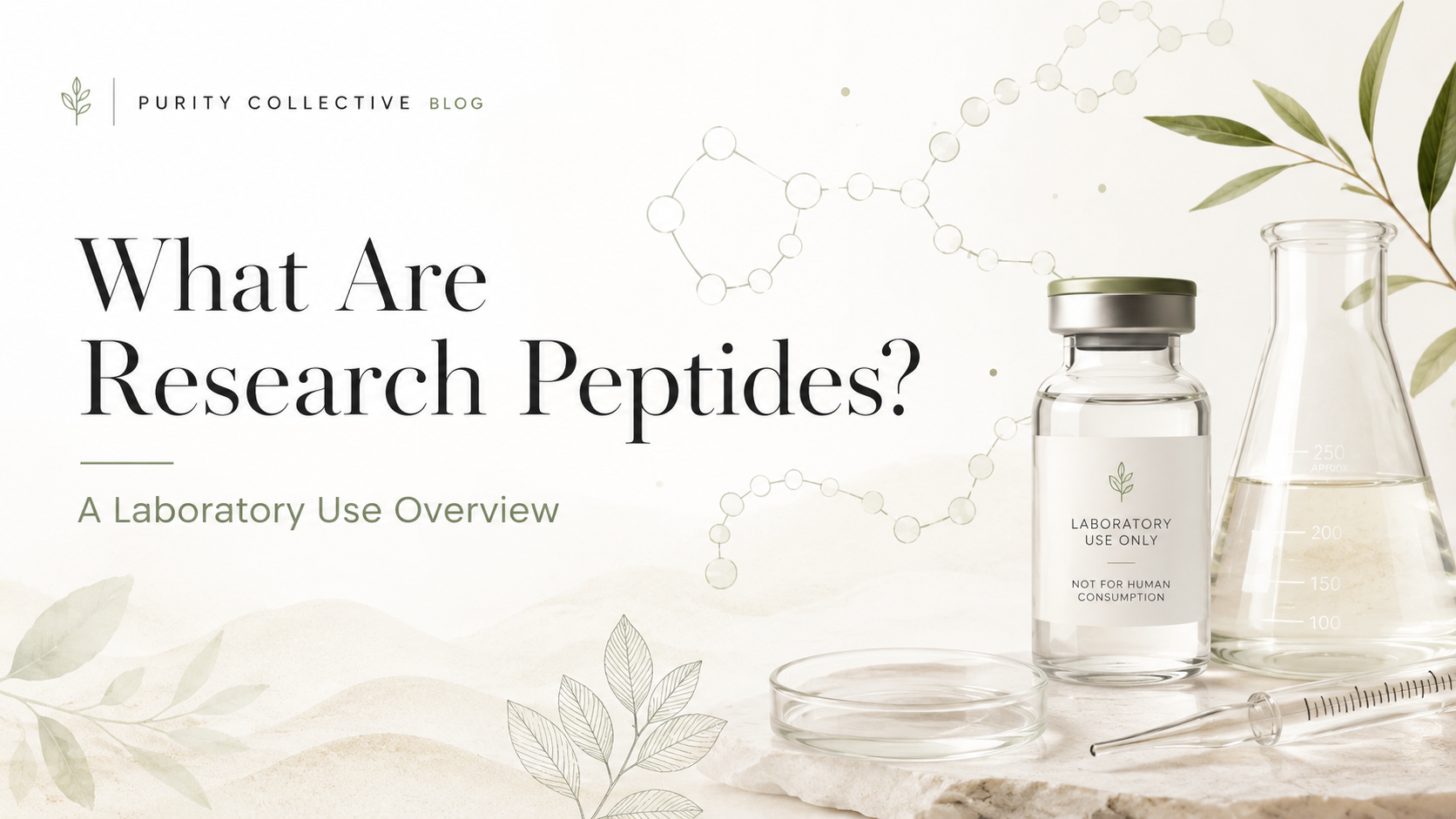
Research peptides are synthetic or isolated peptide reference compounds used in controlled laboratory, in vitro, analytical, or formulation research settings. In a catalog context, they are typically organized by the pathway or research model where they are most often referenced, such as mitochondrial signaling, neuropeptide biology, tissue repair, or metabolic regulation.
Because peptide names can overlap with broader scientific literature, it is important to separate research reference material from products intended for human or veterinary use. Purity Collective products are supplied for laboratory and investigational use only, not for administration.
What Makes a Peptide a Research Material?
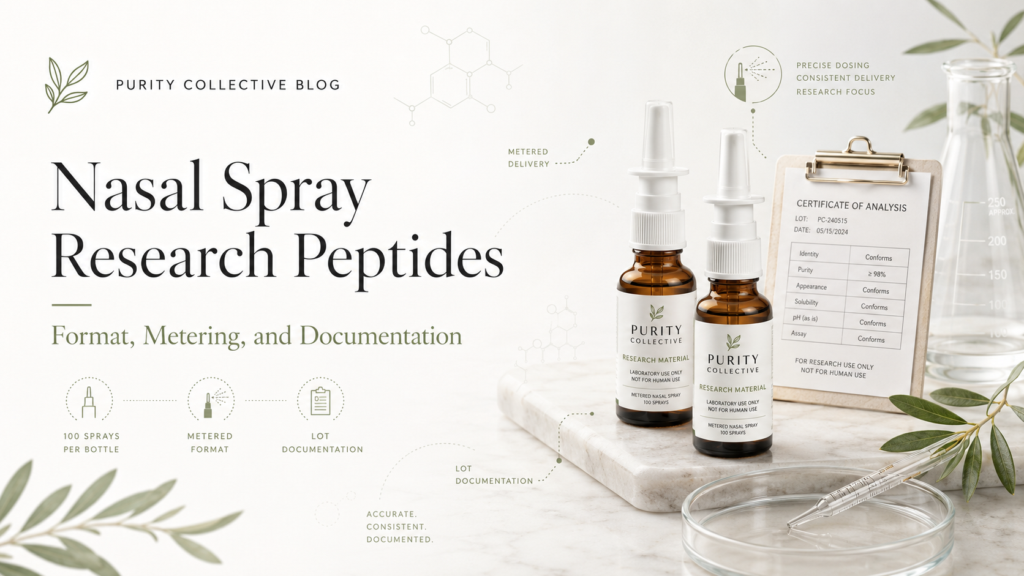
A research peptide listing should make the compound identity, format, size, and documentation easy to evaluate. Common formats include lyophilized vials and metered research formats such as nasal spray preparations. The product page should identify the compound, the amount supplied, and any available quality documentation.
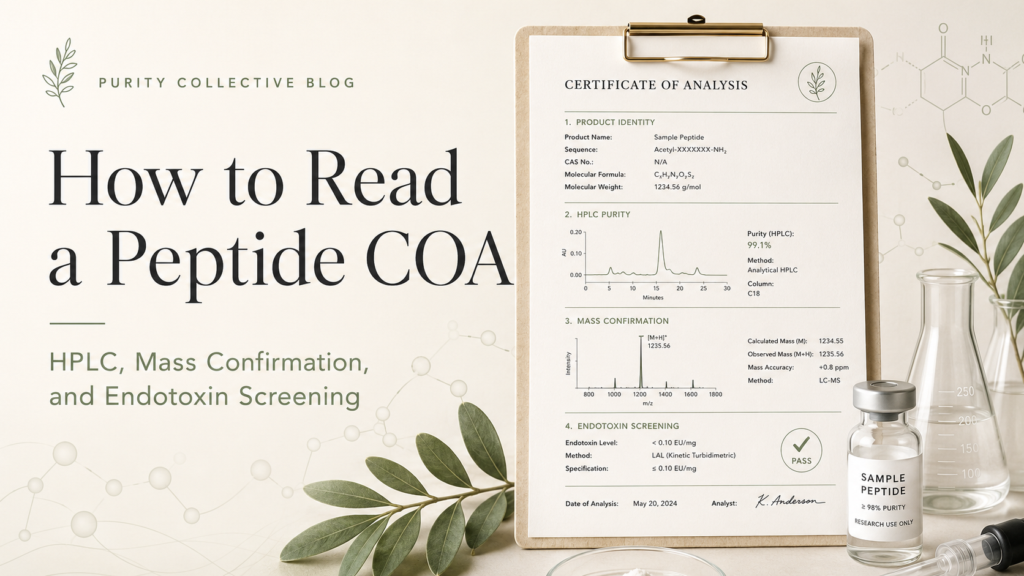
Researchers commonly review whether a peptide has been evaluated by HPLC, whether mass confirmation is available, and whether endotoxin screening has been performed. These documents help laboratories confirm that the material matches the expected reference profile before it is used in a workflow.
Common Product Details to Review
Important product details include the compound name, total milligrams, purity statement, batch or lot documentation, storage guidance, and whether a Certificate of Analysis is available. For blends, the listing should clarify which compounds are included and the amount of each component.
Category organization can also help researchers navigate a catalog. For example, a product may appear under Radiance when it is commonly referenced in redox, mitochondrial, or dermal research, while a product under Recovery + Repair may be associated with tissue repair or inflammatory-signaling models.
Responsible Catalog Language
Responsible peptide copy should avoid treatment claims, dosing claims, or human outcome promises. A research-grade catalog should describe pathway relevance, documentation, and material format without implying clinical use. This protects both the researcher and the brand by keeping the product context clear.
When comparing research peptides, start with identity, documentation, and intended research model. A strong product page should make those details easy to find.