
Your cart is currently empty!.
You may check out all the available products and buy some in the shop.
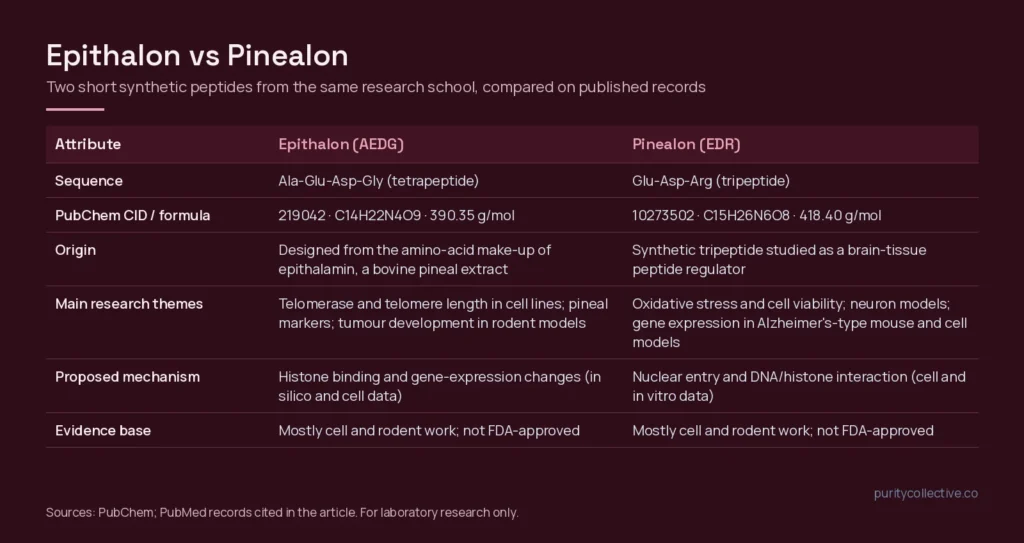
Continue ShoppingEpithalon (AEDG) and Pinealon (EDR) are different short peptides from the same research programme. A side-by-side look at structure, research models, null results and…
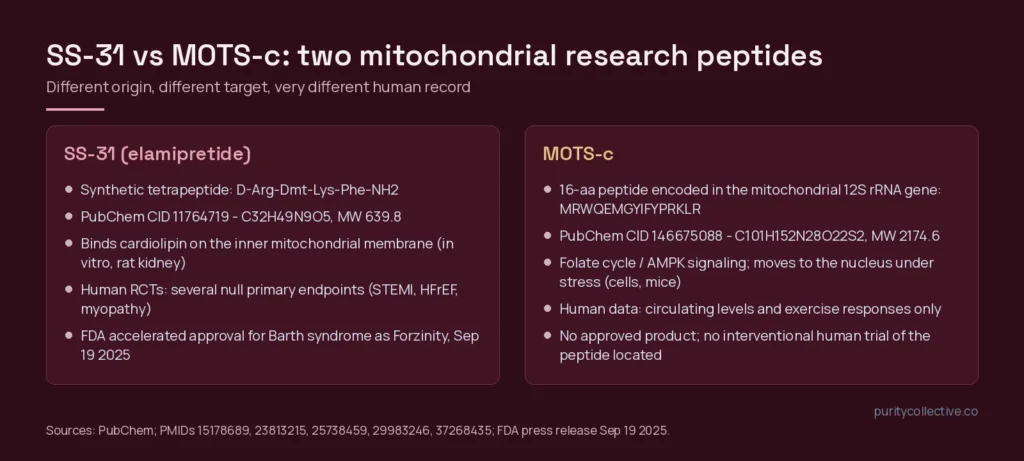
SS-31 (elamipretide) and MOTS-c compared: origin, identity, cell, mouse and human studies, FDA status, what the evidence does not show, and Purity's posted COAs.
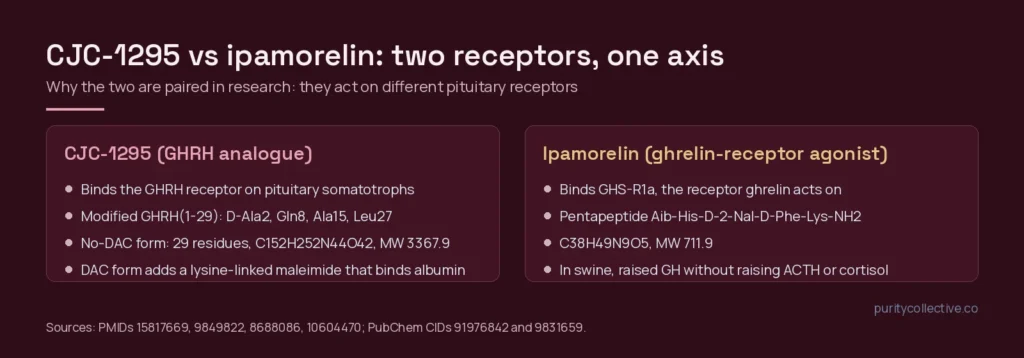
CJC-1295 is a GHRH analogue and ipamorelin a ghrelin-receptor agonist. How they differ, with vs without DAC, why they're paired, and how to read…
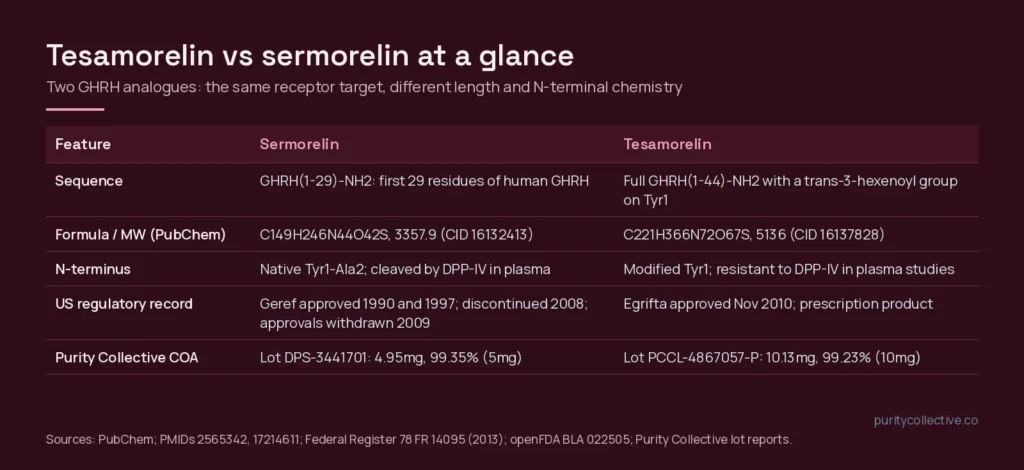
Tesamorelin and sermorelin are both GHRH analogues. How their structure, plasma stability, US regulatory history and research evidence compare, with COA notes.
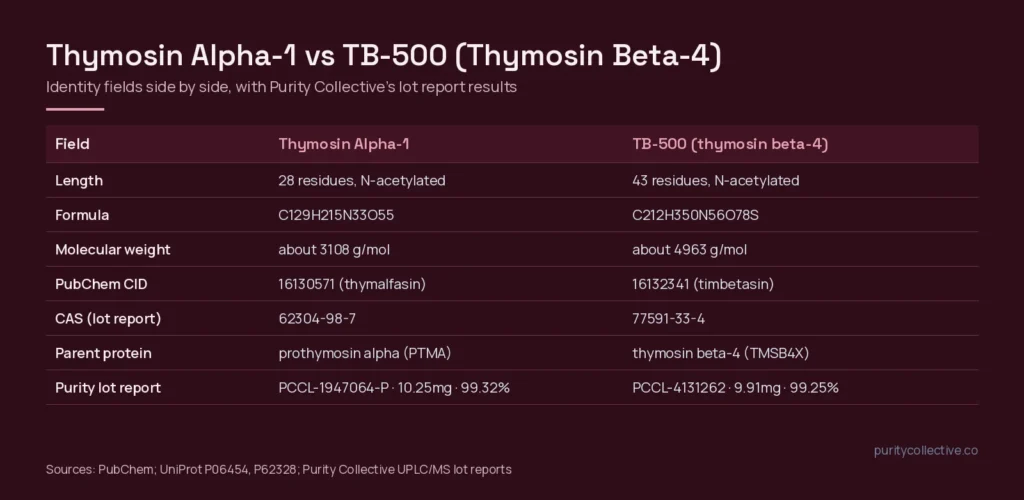
Thymosin Alpha-1 and TB-500 share a name, not a molecule: a 28-residue immune-signaling peptide vs 43-residue actin-binding thymosin beta-4, compared with lot data.
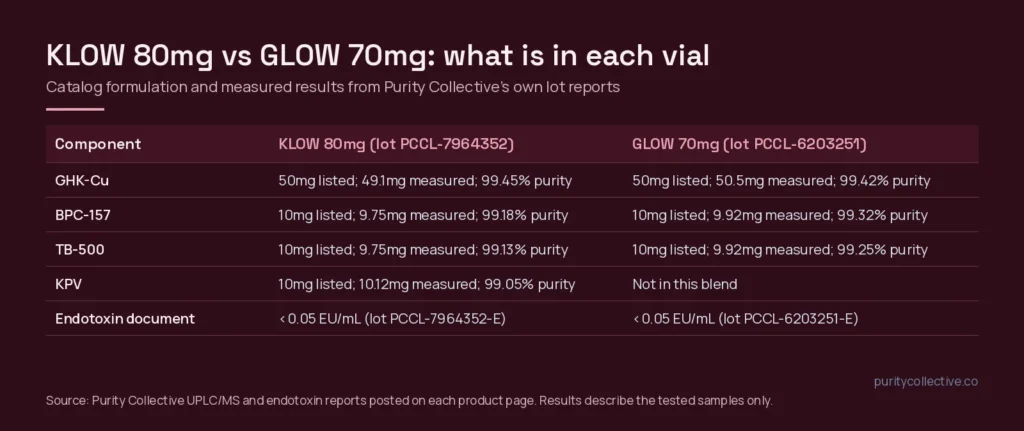
KLOW and GLOW share GHK-Cu, BPC-157 and TB-500; KLOW adds KPV. A component-by-component comparison with identity data, study evidence and COA results.
A research disclaimer defines the scope of the catalog. It should be read with the specific product record and its supporting documents, not treated…
A COA review should record what is missing as carefully as what is present. Unclear lot mapping, missing units, unstated limits, or vague methods…
A certificate issue date and an analysis date can serve different purposes. Review both with the batch or sample identifier and note any chronology…
A format label identifies how a catalog record is presented. It does not by itself establish the scope of an analytical document or a…