
BPC-157 and TB-500 are two peptide reference compounds frequently discussed in tissue repair and cell biology research literature. They are often reviewed separately, and they may also appear together in blend formats for comparative research models.
As with all peptide reference materials, these products are intended for in vitro investigational or laboratory research use only. Product copy should describe research context and documentation rather than human outcomes.
BPC-157 Research Context
BPC-157 is a synthetic pentadecapeptide reference compound derived from a gastric protein fragment. It is commonly referenced in literature involving connective tissue modeling, angiogenic signaling, fibroblast migration, and gastrointestinal mucosal research.
Researchers reviewing BPC-157 products should look for compound identity, total milligrams, quality documentation, and whether the listing clearly states research-use-only positioning.
TB-500 Research Context
TB-500 is a synthetic peptide reference compound corresponding to an active fragment associated with thymosin beta-4 research. It is commonly referenced in studies involving actin sequestration, cellular migration, angiogenesis, and tissue remodeling models.
Because TB-500 and BPC-157 are discussed in overlapping research areas, they often appear in the same Recovery + Repair catalog category.
Blend and Format Considerations
Some catalogs offer BPC-157 + TB-500 as a combined reference preparation. In those cases, the product page should clearly describe the amount of each component. A blend should not obscure the underlying material identity or documentation expectations.
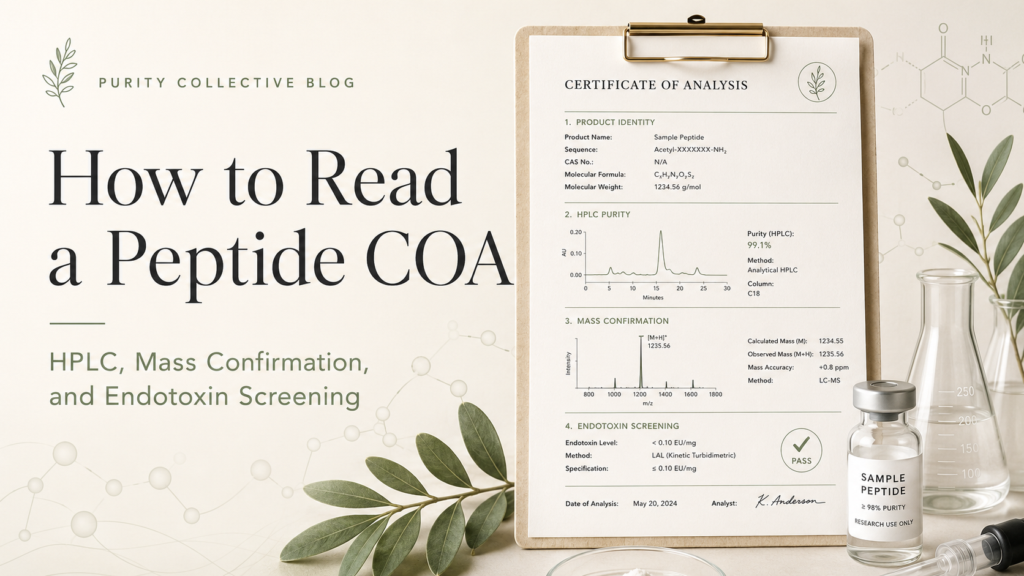
Whether supplied as individual vials or a blend, researchers should review available COAs, HPLC results, mass confirmation, endotoxin screening, and batch details before selecting a material for a workflow.
Responsible Sourcing Notes
Strong sourcing starts with clarity: compound identity, lot documentation, research-use-only labeling, and no human-use claims. Those details make it easier to evaluate BPC-157, TB-500, and related products in a responsible research context.