
Your cart is currently empty!.
You may check out all the available products and buy some in the shop.
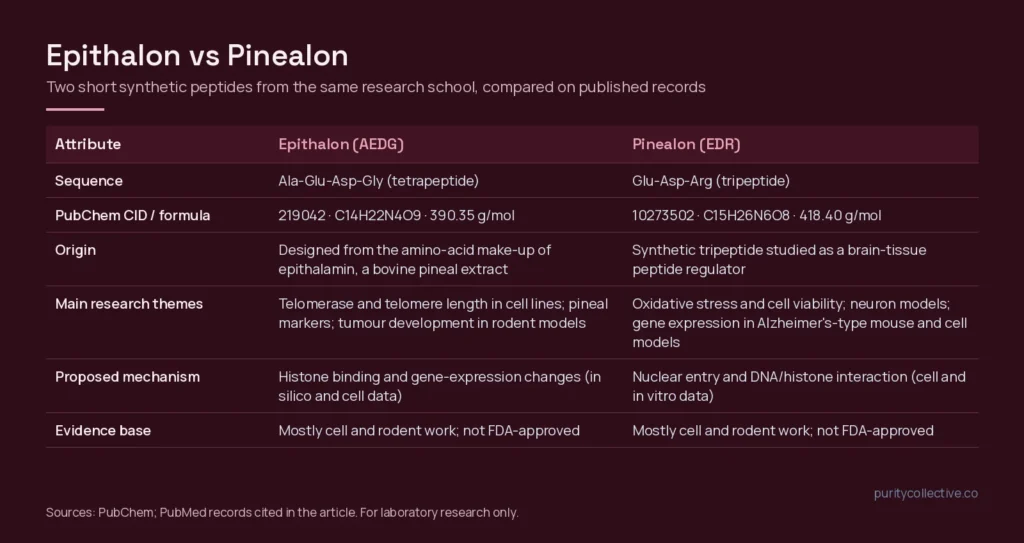
Continue ShoppingEpithalon (AEDG) and Pinealon (EDR) are different short peptides from the same research programme. A side-by-side look at structure, research models, null results and…
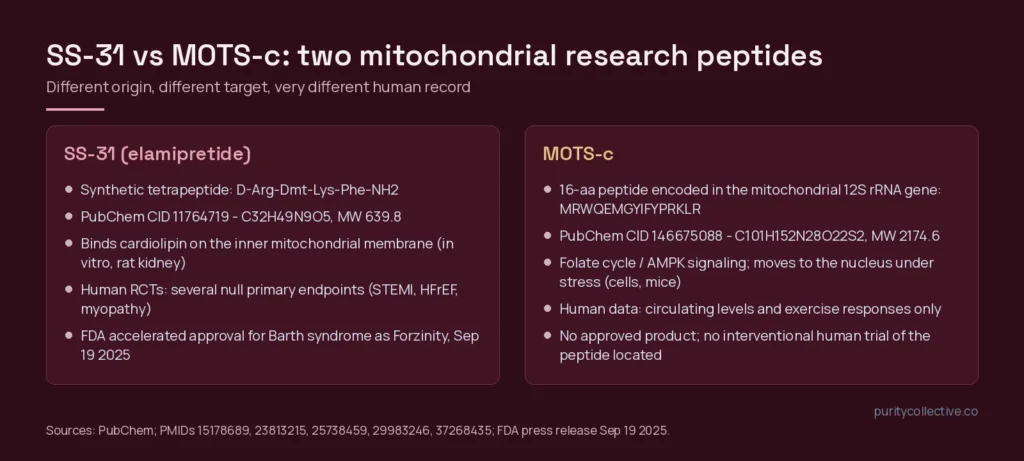
SS-31 (elamipretide) and MOTS-c compared: origin, identity, cell, mouse and human studies, FDA status, what the evidence does not show, and Purity's posted COAs.
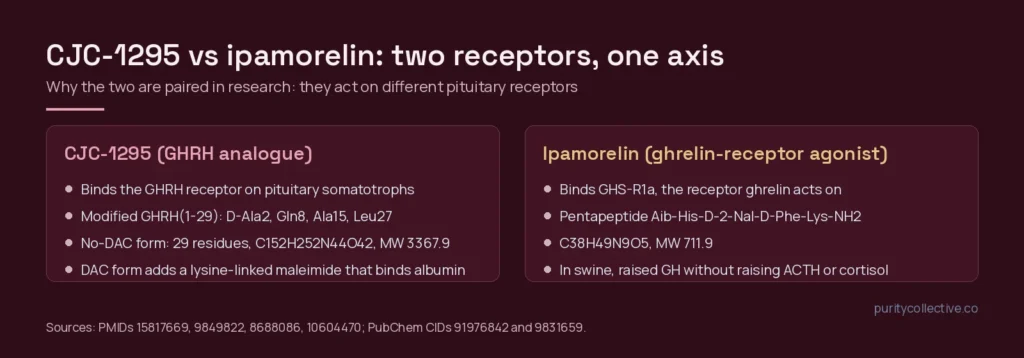
CJC-1295 is a GHRH analogue and ipamorelin a ghrelin-receptor agonist. How they differ, with vs without DAC, why they're paired, and how to read…
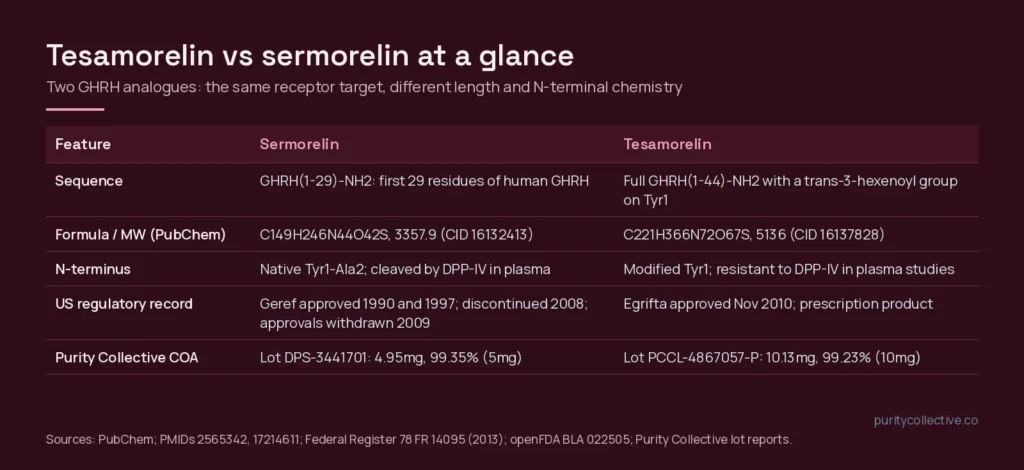
Tesamorelin and sermorelin are both GHRH analogues. How their structure, plasma stability, US regulatory history and research evidence compare, with COA notes.
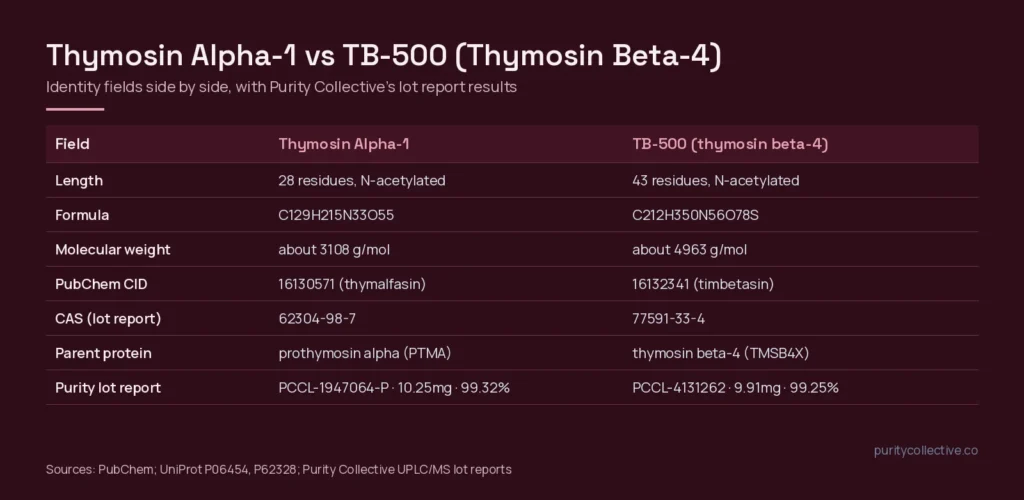
Thymosin Alpha-1 and TB-500 share a name, not a molecule: a 28-residue immune-signaling peptide vs 43-residue actin-binding thymosin beta-4, compared with lot data.
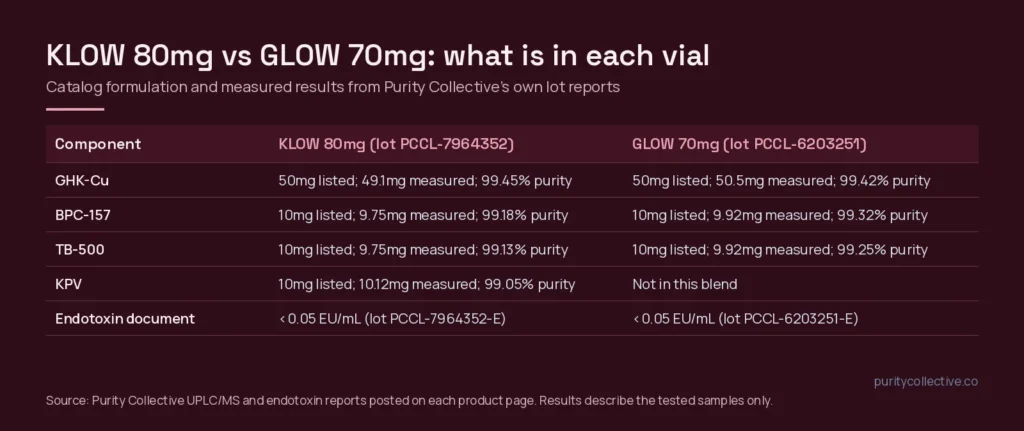
KLOW and GLOW share GHK-Cu, BPC-157 and TB-500; KLOW adds KPV. A component-by-component comparison with identity data, study evidence and COA results.
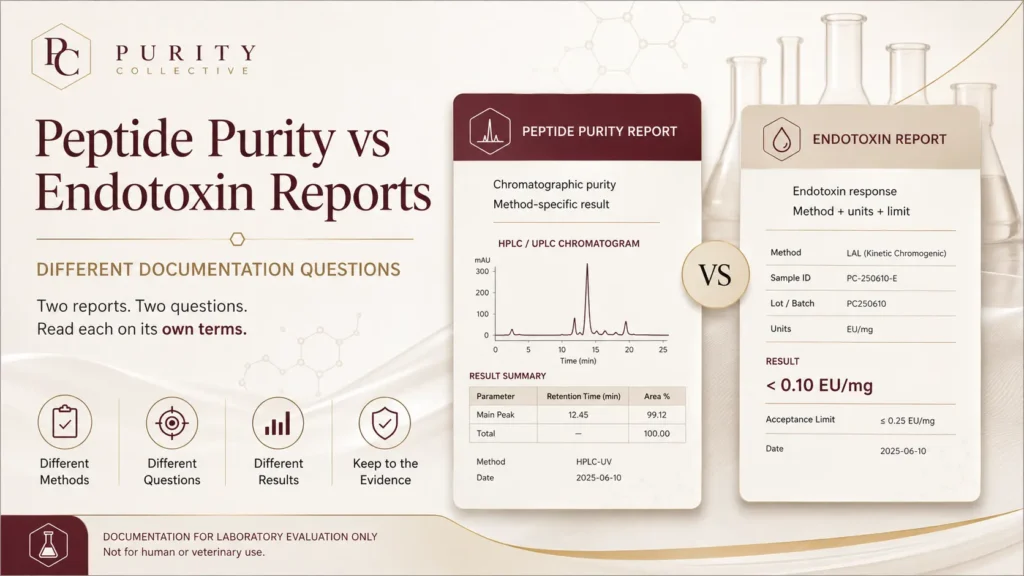
Chromatographic purity and endotoxin reports are separate records. Each result needs to remain attached to its own method, material identifier, units where applicable, date,…
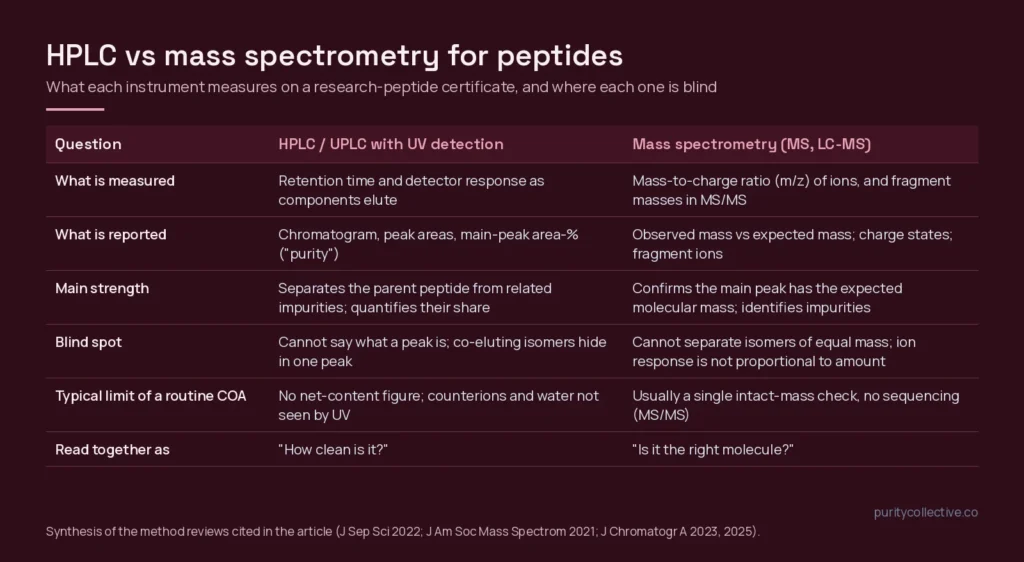
HPLC separates and quantifies; mass spectrometry confirms identity. What each shows on a peptide COA, where each is blind, and what HPLC-MS, UPLC and…
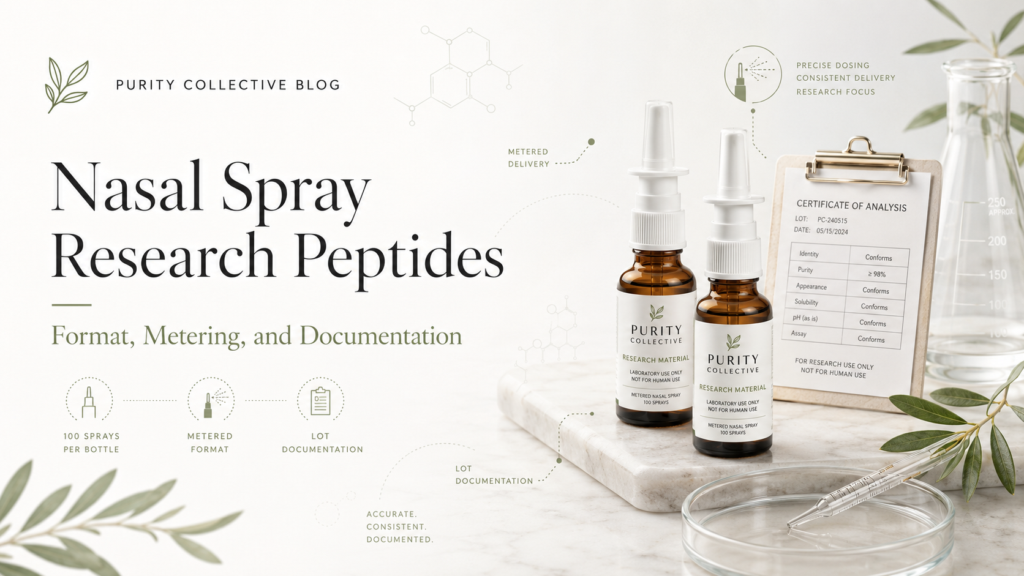
A lab-focused guide to nasal spray peptide reference materials, including metered format details, total milligrams, and documentation review.
Learn how research peptide catalog pages should be evaluated by identity, format, quantity and documentation while staying within a lab-use boundary.