

Your cart is currently empty!.
You may check out all the available products and buy some in the shop.
Continue ShoppingA public identity reference can help with names and identifiers, while a product record and its documents address the specific catalog item. They answer…
A format label identifies how a catalog record is presented. It does not by itself establish the scope of an analytical document or a…
Quantity variants should be treated as separate catalog records. Compare their identity, quantity, format, and available documents individually.
A blend record requires component-by-component reading. A document for one named component does not automatically describe the entire blend or a related single-compound listing.
A catalog quantity and a result reported for a submitted analytical sample are different statements. They should be displayed and reviewed separately.
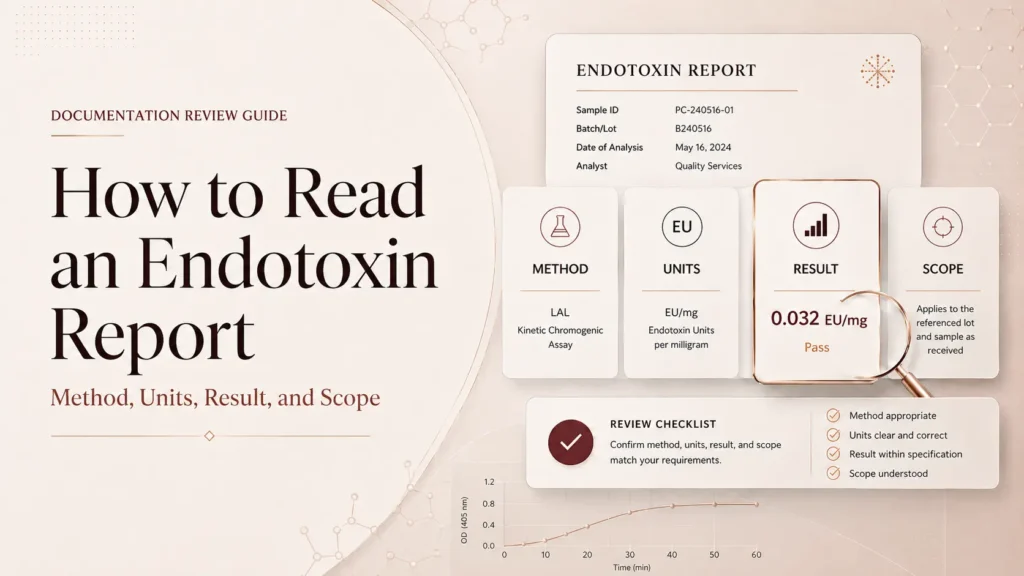
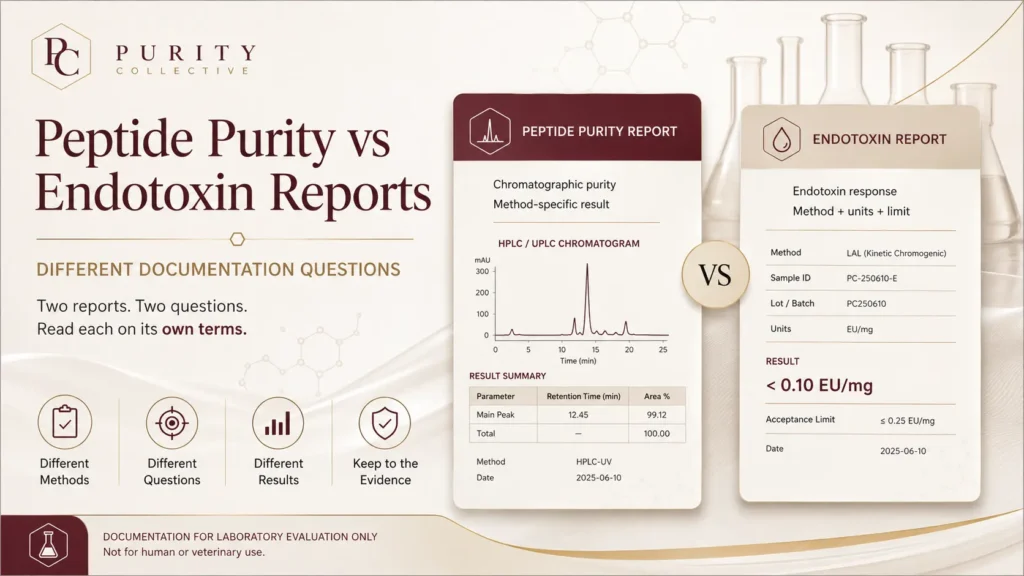
Read an endotoxin report by confirming the material connection, method, units, numerical result, date, and any printed acceptance criterion before assigning meaning to the…
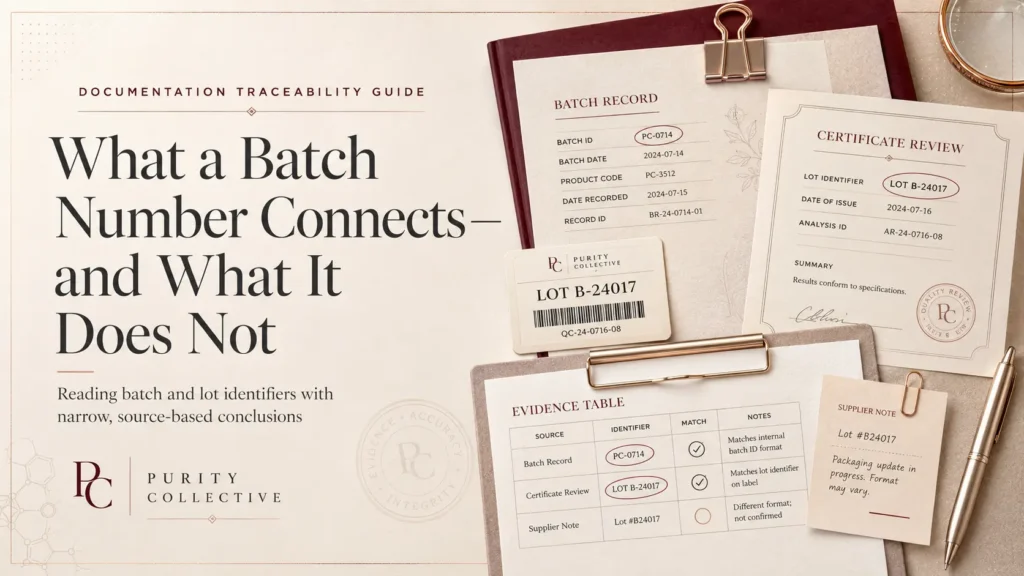
A batch or lot number can connect a product record to a specific document when the identifiers match. It does not automatically transfer evidence…
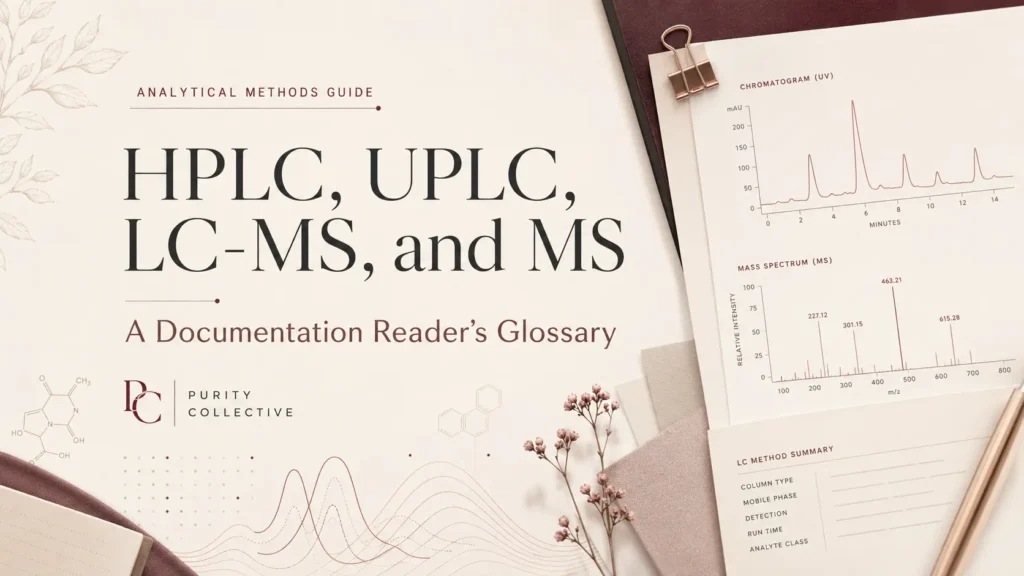
Analytical abbreviations describe different methods and evidence types. The useful question is what the stated method measured and what the document actually reports.
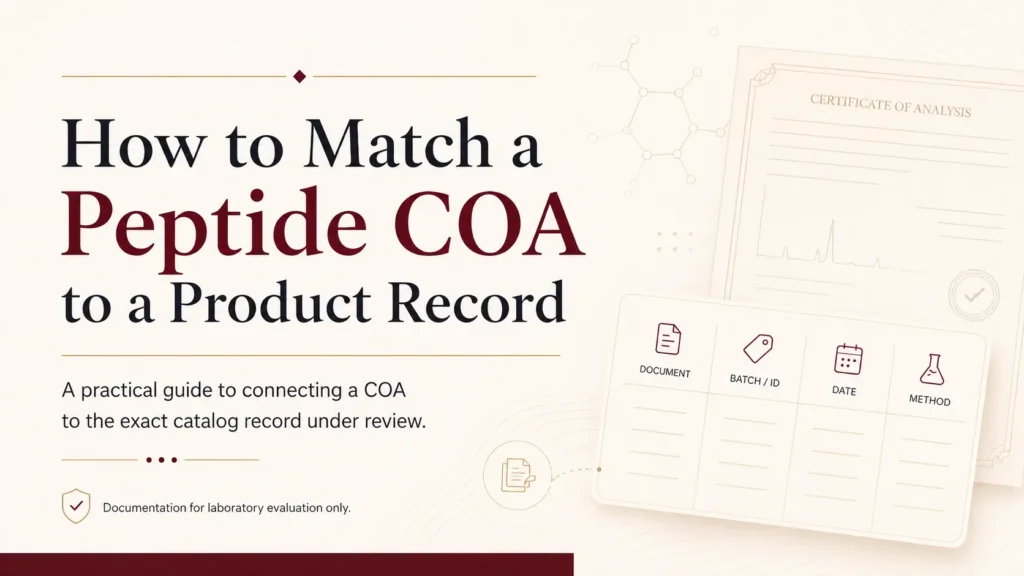
A COA is useful only when its compound, batch or sample identifier, quantity or format context, dates, and issuer can be connected to the…
Chromatographic purity and endotoxin reports are separate records. Each result needs to remain attached to its own method, material identifier, units where applicable, date,…